Published October 2, 2025 07:43AM
Our Favorite Triathlete Stories of All Time
From old-school Tinley Talks to modern-day revelations, our editors and contributors pick the stories they loved reading and writing.
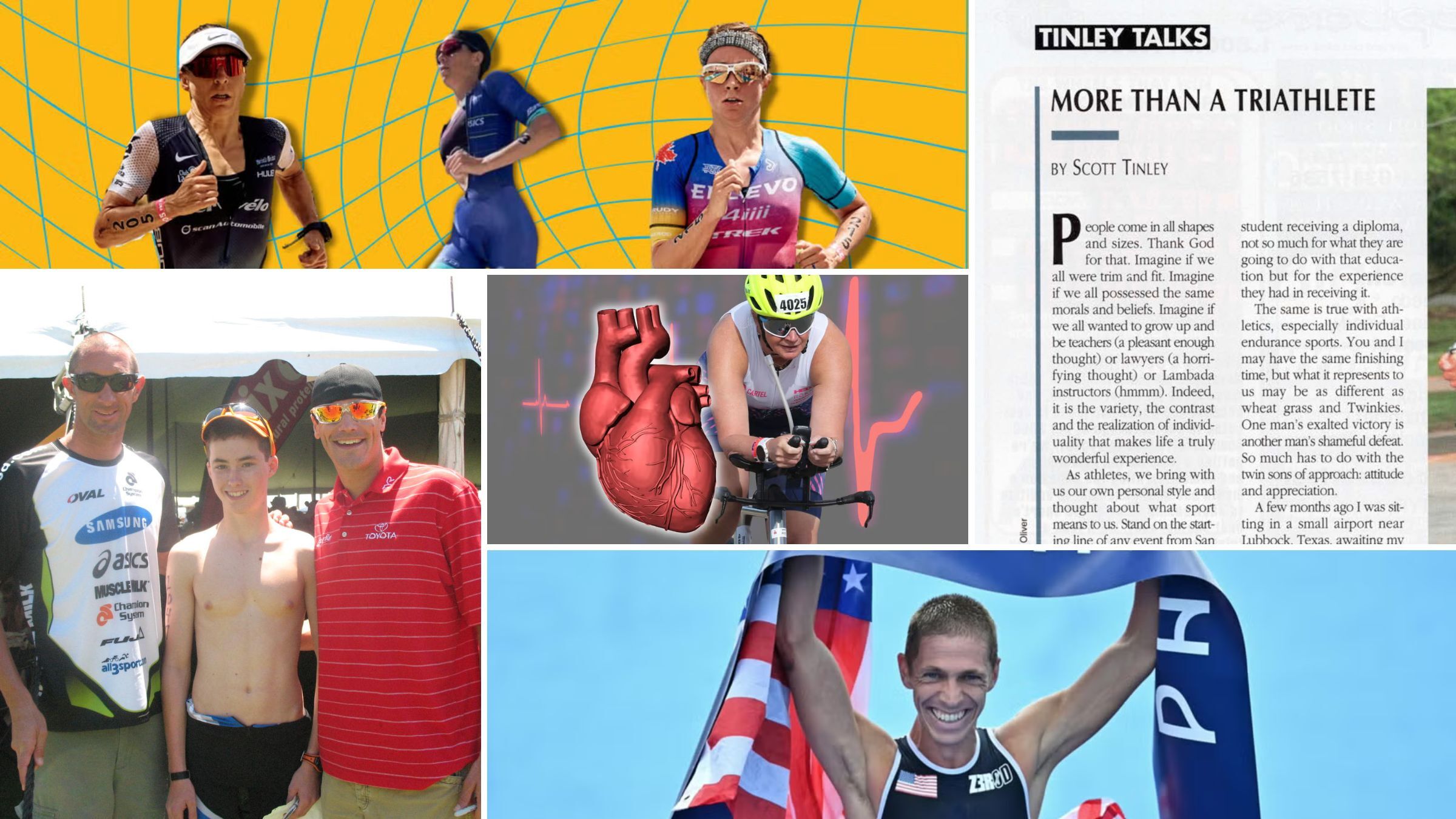
Triathlete's editors and contributors share their favorite stories of all time. (Photo: Triathlete)
10 editors and contributors pick their favorite Triathlete stories of all time
- •Tinley Talks: More Than a Triathlete•How Triathlon Training Remodels Your Heart (For Better and For Worse)•Secrets of the Fastest Female Runners in Triathlon•The Very Human Way Coach Olav Bu Builds Norwegian Triathlon Machines•A Triathlon Training Guide to Build a Bombproof Run Off the Bike•Pregnancy and Postpartum Race Deferral Policies in Triathlon•Americans Lead Paratriathlon Medal Count with 8 at Paris 2024 Paralympic Games•Andy Potts’ Five Rules of Recovery•Chrissie Wellington’s Mind-Over-Body Battle•Searching for Peter Reid
Triathlete’s history reaches all the way back to 1983, when three friends decided to put together a fun little magazine about triathlon. Since then, tens of thousands of articles have been published in print and online by our editorial staff and contributors, many of whom were fans and ardent readers of Triathlete before they saw their name on the masthead. Case in point: editor-in-chief Chris Foster likes to brag about having a Triathlete-branded credit card in college. He was a tri nerd before tri-nerding was cool.
In fact, “tri nerd” applies to all of us at Triathlete. Nowhere is that more evident than when we asked our team members to tell us which Triathlete article is their favorite. Some chose articles they wrote, because they loved the deep dive into a topic or picking the brains of the best minds in the sport; others chose contributions from the pros they idolized as a child (see Robbie Deckard’s photo, below).
Our favorite Triathlete articles
Tinley Talks: More Than a Triathlete
October 2000
It was the turn of the century when I was learning how to read by flipping through pages of Triathlete and Velo News magazines on the potty trainer. I had seen my dad’s magazines piled on top of the bathroom toilet, but I only ever went into the bathroom to brush my teeth or take a bath. So I asked my mom what those magazines were doing on the toilet, and she told me that my dad reads them while he uses the bathroom. Like most other boys my age, I wanted to grow up to be just like my dad. So the next time I used the bathroom, I grabbed a magazine and started reading. I had no idea what any of these words meant, but I was starting to learn.
In 2015, I wrote a high school book report about Scott Tinley’s Racing the Sunset. I had been reading the “Tinley Talks” column in Triathlete for years, and there was just something about them that resonated with me. My classmates looked at me wide-eyed, like I was reading out the latest numbers from the stock market. They didn’t know what “triathlete” meant. At the time, I could hardly even spell it.
Being an athlete was something that Tinley talked a lot about in his book, and it is something that I now begin to ponder at this point in my life. It’s funny that 25 years after More Than a Triathlete was written, I find it more relatable than ever. Oh, how the world has changed, but so many things have stayed the same. An athlete grappling with life outside of sport, attempting to peel their identity away from the results page…that has not changed.
From the October 2000 Tinley Talks: “You and I may have the same finishing time, but what it represents to us may be as different as wheat grass and Twinkies. One man’s exalted victory is another man’s shameful defeat. So much has to do with the twin sons of approach: attitude and appreciation.”
-Zach Nehr, contributor
How Triathlon Training Remodels Your Heart (For Better and For Worse)
March 2025
Heart health will always be something in the back of my mind, given family history. And it’s easy as an endurance athlete to be arrogant and think that I’m in good shape; that won’t happen to me. But Elaine Howley dove deep into the stories of other endurance athletes who believed they were the picture of health until they suffered cardiac symptoms, only to find that there is such a thing as too much triathlon training (or any endurance sport for that matter).
What I liked about the article was its balance between informing about a really important health condition and acknowledging that triathletes enjoy spending hours on a bike or long weekend runs. It’s not about stopping healthy exercise, but building awareness for athletes to never ignore signs that their body might be trying to communicate something to them.
-Rebekah Brately, associate editor
Secrets of the Fastest Female Runners in Triathlon
June 2023
My favorite Triathlete story has to be “The Secrets of the Fastest Female Runners in Triathlon.” This was back in 2023 when some of the fastest female pros, like Anne Haug, Tamara Jewett, and Ashleigh Gentle, were laying down blazing fast splits, shattering records, and pushing the boundaries, effectively “raising the standard and eroding the gender gap,” according to Jewett’s coach. We wanted to know the secret behind this fast female-revolution, so we reached out to coaches Suzanne Zelazo, Dan Lorang, and David Tilbury-Davis, who pulled back the curtain and gave us a behind-the-scenes look at the process.
As it turns out, there is no “magic formula.” Instead, it’s the result of a thoughtful approach to consistency and a gradual buildup of mileage. We talk about brick workouts vs. running fresh, favoring RPE over gadgets, developing the ability to pace by feel, strength work for performance, and prioritizing recovery. It’s a veritable treasure trove of insights for age-groupers looking to up their running game.
-Brittany Bevis, contributor
The Very Human Way Coach Olav Bu Builds Norwegian Triathlon Machines
March 2023
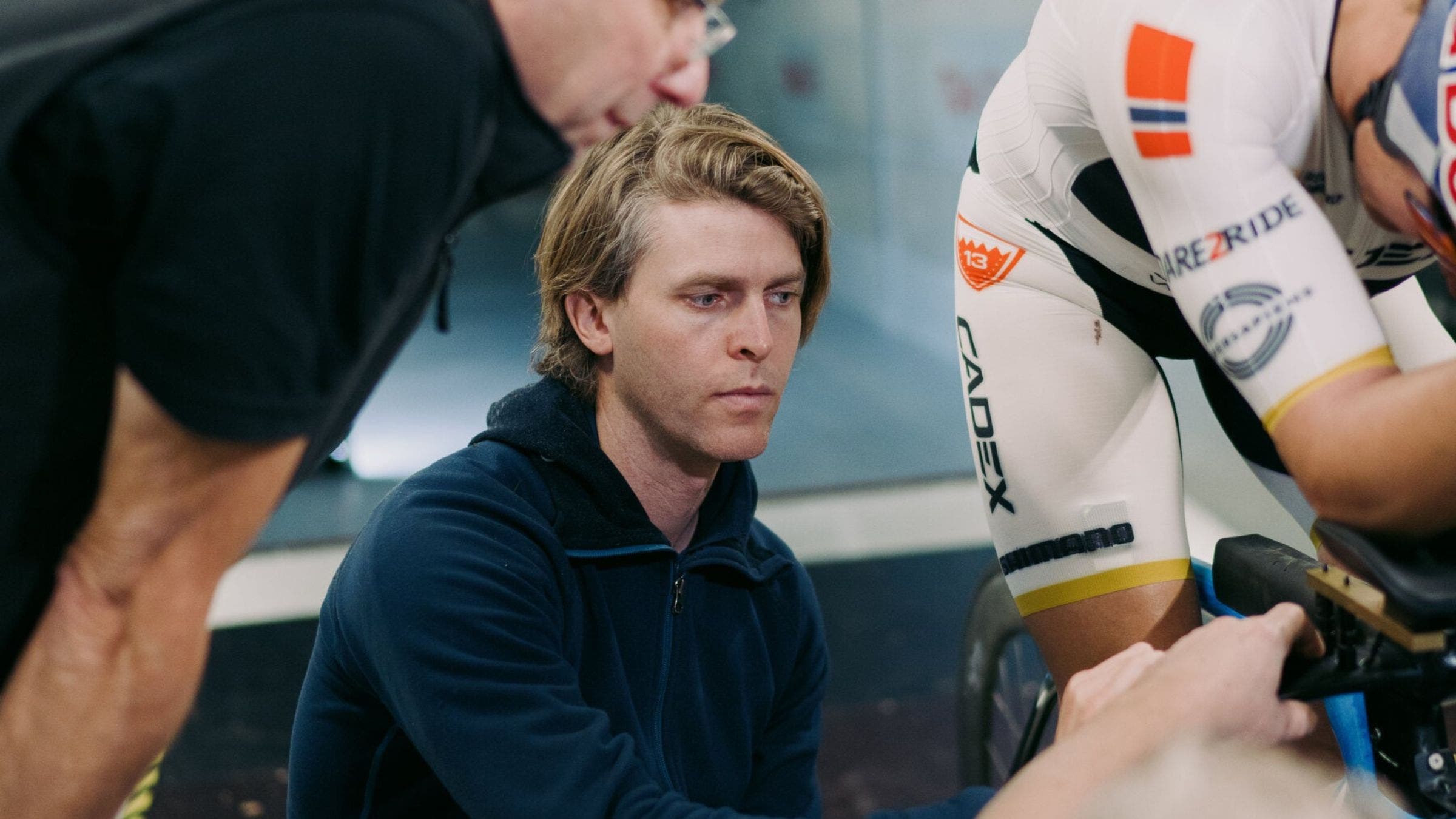
While we weren’t exactly breaking new ground talking about the Norwegian training method when Tim Heming interviewed coaching mastermind Olav Bu back in 2023, little was still known about the why behind the philosophy – though we had some understanding of how. In his wide-ranging interview with Bu, Heming did what Heming does best and got the the bottom of Bu as a person and how it informed the unique way he trains his stable of athletes.
The interview touches on the tragic helicopter accident involving his family and how the emotions behind that dark page in his life actually play a role in the way he coaches. He also speaks to the way he pushes well past the limits of the human body but has no tolerance for those who play outside the rules.
“At the moment we are at the top of the sport and everybody is trying to figure out what we’re doing,” Bu presciently adds at the end of the interview. “Suddenly, someone else will be on top, and you’ll listen to them. What is good advice for me is not necessarily good for you and vice versa. The lucky part is as the winner you get your 15 minutes of fame and can tell your story. Thank you for allowing me to tell some of my story here.”
-Chris Foster, editor-in-chief
A Triathlon Training Guide to Build a Bombproof Run Off the Bike
September 2023
As a coach, I’m always aiming to prepare my athletes for a strong run off the bike. But when an athlete has big goals and I really, really, want to ensure they run to the best of their potential, I turn to this article for a comprehensive, everything-but-the-kitchen-sink, leave-no-stone-unturned run training strategy. Many – even most – of the Bombproof Run Off the Bike training elements are ones I include in every athlete’s training plan. I’m sure many of these are in your training plan, too. But when I need to find that final 10% of fitness and preparation, I look to those extra nuances in the article, like the specific structure of the run interval workouts and the late intervals incorporated into long runs. So if you’re seeking that top layer of fitness and preparation to bombproof your run in your next triathlon, or just want to make sure you’re hitting all the essentials of run off the bike training, this article has you covered.
-Alison Freeman, contributor
Pregnancy and Postpartum Race Deferral Policies in Triathlon
June 2024
In 2023, just two months before I was due to race Ironman Chattanooga, I found out that I was due for another kind of endurance race entirely: Parenthood. After extensive contemplation and soul searching, I deferred my Ironman entry to the following year, when I would be less than seven months postpartum. Then, I figured, I would only be making myself uncomfortable; while I would be stressing over the logistics of pumping milk mid-race and worrying over whether I was giving myself pelvic prolapse, my baby would be safe and sound on the sidelines.
If I had been given the option of taking a two-year deferral, I would have. But my inability to do so is part of why this ordeal was such a blessing. In return for my experiences, I was inspired to write about the various ways triathlons are supporting new mothers — an article that was ultimately read by Ironman leadership and sparked a change in their policies. Now, pregnant and newly postpartum women are allowed to defer their race entries for up to two years. One-year deferrals are also available to the partners of pregnant women, as well as to those who have chosen to adopt or have a child through surrogacy.
Slowly but surely, new mothers are being supported financially, logistically, and emotionally in the triathlon world, but there is still much to be done. Since writing this article, I have delved further into how to get more women in triathlon and how to balance breastfeeding and racing. As tends to be the case with social movements, my reporting has been just one part of a larger conversation — but it’s a conversation always worth having.
-Sierra Winters, contributor
Americans Lead Paratriathlon Medal Count with 8 at Paris 2024 Paralympic Games
September 2024
I’m not sure when there’s such a varied and rich tapestry to pick from that it’s possible to pick a greatest Triathlete article of all time, but this one (excuse the recency bias and self-indulgence) was certainly one of the most memorable to write.
The US team was always tipped to perform well in last year’s Paris paratriathlon. But having reported from Pont Alexandre III, the bridge over the Seine, a few weeks earlier at a remarkable Olympic Games, I readied myself that its sister competition could be an anti-climax.
Going in, there were the same concerns over water quality, and in the upheaval, the original plan of two days’ racing was instead squeezed into just over five hours for all 11 categories — by a stretch the biggest day in paratriathlon’s history.
It was always going to be busy, and then the medals started tumbling in for the US, and just didn’t stop. Eight in total, kicked off by Kendall Gretsch’s silver in the wheelchair race, with three golds, including seasoned campaigners Hailey Danz and Grace Norman and a welcome surprise from Chris Hammer.
With sprint distance racing happening concurrently, I felt like I covered as much ground as the athletes, dashing from the typewriter in the press tribune to the mixed zone to grab immediate reaction, while trying to make sense of the action — and not make a mistake. The sun rose behind us, and everything began to melt — laptop and laptop operator included.
The reporting ended up being focused on the medal haul, which was understandable, but as a source of inspiration, the event went far further than that. Not just for budding sportsmen and sportswomen living with disability and believing that in LA and beyond it could be them, but from a personal perspective, a welcome reminder of why sports journalists become sports journalists.
-Tim Heming, contributor
Andy Potts’ Five Rules of Recovery
June 2009
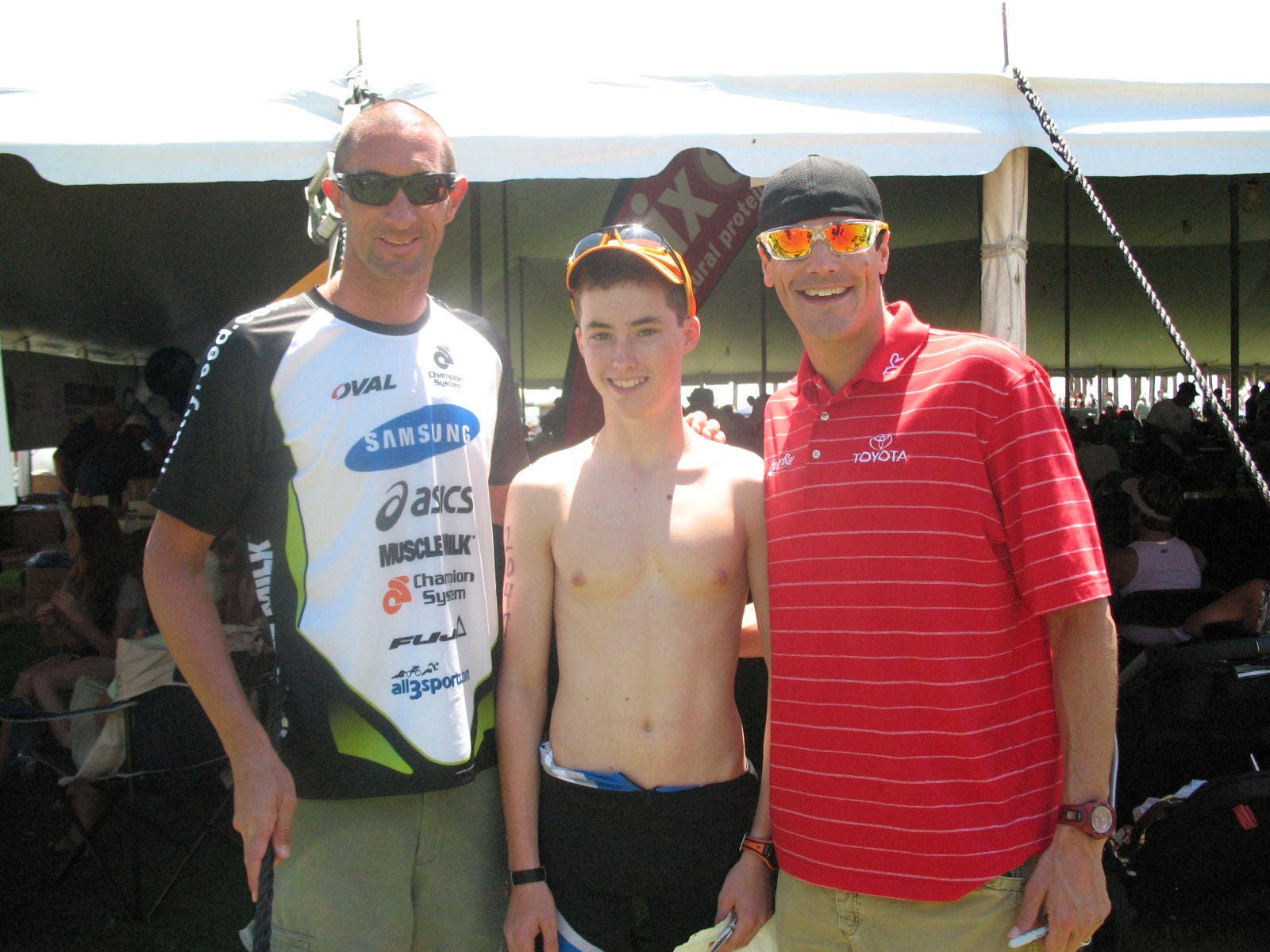
I admit it. I’m an Andy Potts fanboy. His easy-going, friendly demeanor makes him one of the most approachable pros out there. On the other hand, his fierce competitive side is exactly what you’d expect from a 70.3 world champion. Above all, Andy blends “simple” common sense with meticulous attention to detail. Written over a decade ago, Andy Potts’ 5 Rules of Recovery exemplifies his pragmatic approach to training.
The rules are simple — sleep a lot, replace your shoes, and eat enough. However, it’s the comment about putting a pillow between your legs that really hit home for me as a teenage reader. There I was, 14-year-old Robbie, trying to notice a difference in my posture from sleeping in a new position. The crazy thing is, I did notice a difference. Ever since then, it’s been apparent to me that the devil is in the details. To be your best, you’ve got to train, eat, and sleep — a lot. But, there’s much more to it. Noticing the little things and being fully in tune with your body is what separates the good from the best. Thanks for the lesson, Andy.
-Robbie Deckard, contributor
Chrissie Wellington’s Mind-Over-Body Battle
September 2012
I was on the Triathlete and Inside Triathlon magazine staff during the peak of the Chrissie Wellington era, where this brilliant British woman came over from a career in UK government and a Nepalese NGO into professional triathlon, where she absolutely dominated. We had a front-row seat to her wins at Alpe d’Huez, her record-breaking victories at Challenge Roth, and – of course – her Kona world titles.
She broke Paula Newby-Fraser’s Ironman World Championship record, which had stood for 17 years, in 2009, and she was undefeated at the Ironman distance. She pushed the boundaries of what women could achieve in long-course triathlon, and she set the stage for a new era of professional women triathletes.
In 2010, Chrissie withdrew from Kona on race morning due to illness, opening up a window for Mirinda Carfrae to win the world title. Then, in 2011, two weeks before the Ironman World Championship, Chrissie was involved in a bike crash that left her with crazy road rash and a torn pectoral muscle. We all wondered, Would she still race? Would this open the door for her to be defeated? Hollywood scriptwriters could not have written a more compelling story: Her incredible mental toughness allowed her to battle through one of the most brutal courses in the sport and not only finish but win, a mental battle she detailed in an article for Triathlete afterward. She called her 2011 Kona victory her “perfect race,” and she retired from the sport.
–Bethany Mavis, contributing editor
Searching for Peter Reid
January 2009
Technically, this isn’t a Triathlete article, but one in its now-defunct sister publication, Inside Triathlon (RIP). But boy, is it a good one: in 2007, Peter Reid, three-time Ironman World Champion, completely disappeared from the triathlon radar at the height of his fame. It wasn’t a shock to anyone who had followed his career – Reid was notoriously enigmatic, which added to his overall mystique.
But when then-editor T.J. Murphy set out to answer the question “whatever happened to Peter Reid?” I’m not sure he understood the complexities of the assignment. He found Reid, all right – in a small Canadian town described as “fifteen-hundred people, four churches, four bars,” where the triathlon legend was working as a bush pilot and eating Cheez Whiz. He was happy.
I think about this story a lot whenever a pro triathlete retires. In recent years, we’ve heard a lot more about triathletes struggling when they step away from the sport, because the intense, all-consuming nature of training and racing can sometimes mean triathlon becomes a person’s whole identity. Without it, who are they? Murphy’s piece on Reid reminds us there’s not only something waiting on the other side, but that something might be even better – and it tastes like Cheez Whiz.
-Susan Lacke, senior editor