Published February 19, 2026 09:37AM
If you buy through our links, we may earn an affiliate commission. This supports our mission to get more people active and outside.Learn about Outside Online's affiliate link policy
How Accurate Is Your Heart Rate Monitor, Really?
New research shows issues with accuracy in a popular style of heart rate monitor. We look at what this means for triathletes-in-training.
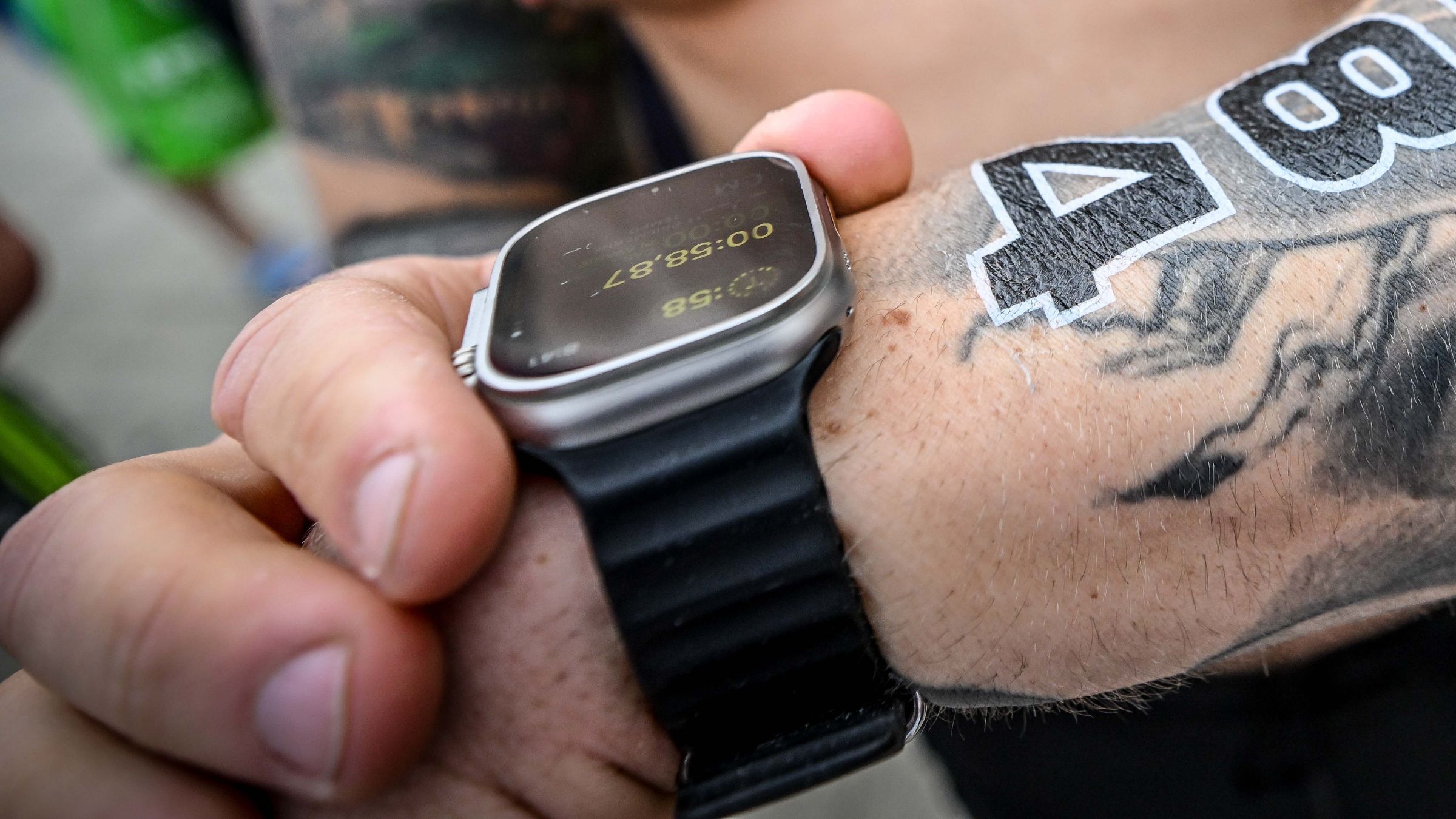
Heart rate monitors offer triathletes another data point to evaluate their training and performance. But research shows your heart rate monitor might not be as accurate as you might think. (Photo: Challenge Family)
Even before daily recovery scores, Training Stress Scores, and Strava yearly reviews, athletes are obsessed with training metrics, and for good reason. Metrics allow us to measure fitness, guide training, and quantify performance, so it makes sense that many of us drool over metrics because they are one of the few ways we can visualize our training progress. In addition to time, distance, and pace, heart rate (HR) is one of the most commonly used metrics among endurance athletes.
Measuring heart rate is nothing new. Since the 1800s, people have used heart rate, taken manually, as an indicator of health. The first truly wearable heart rate monitors (HRM) hit the market in the 1970s and became ubiquitous with endurance training by the 90s. Now, thanks to seamless “smart device” design, even non-athletes track their HR 24/7.
Although comfortable and stylish (OK, as stylish as they can be for a health tool), how accurate are today’s HRMs, and which one should you, an athlete, rely on to guide your training? Researchers decided to find out by testing the accuracy of many top HRMs. The result? Well, it might make you second-guess your next heart rate monitor choice. Before we dive into the science, let’s look at what the market has to offer.
PPG vs. ECG heart rate monitors
All HRMs fall into one of two categories: photoplethysmography (PPG)-based monitors or electrocardiogram (ECG)-based monitors.
ADVERTISEMENT
PPG, more commonly known as “optical heart rate monitors,” shines a light through the skin to detect changes in blood volume. Those changes are used to calculate HR indirectly. PPG monitors are usually built into watches, rings, or arm/wrist straps.
On the other hand (not literally), ECG monitors measure electrical depolarization of the heart to detect HR closer to the source. They come in the form of chest straps, because the electrodes need to be close to the heart.
PPG and ECG differ in technology and practicality. Do they differ in accuracy? Let’s see what science says.
Comparing optical and chest strap heart rate monitors
In a study published in the December 2025 issue of the journal Applied Sciences, researchers compared the accuracy and consistency of 16 PPG-based monitors against a lab-grade ECG-based monitor (the Polar H9). They compared readings from a standard maximal ramp test, as well as from a real-world high-intensity interval training (HIIT) session.
Most PPG-based monitors showed strong agreement with the chest strap at lower intensities. But that changed quickly: the PPG monitors deviated from the chest strap at higher intensities and during the stochastic HIIT session. This is, of course, a meaningful problem for athletes.
ADVERTISEMENT
Further, among the PPG-based devices, there were notable differences in accuracy across the spectrum of intensities. All this to say, PPG still has a way to go before it overtakes ECG in quality.
Why does this matter?
Accurate data matters. If you spend time, money, and effort on training, you don’t want to be misguided by an inaccurate device. Having an HRM that misreads is worse than having no HRM at all. If you’re meant to run one hour at 130 beats per minute (BPM) but you unknowingly run at 160 BPM, your training session will miss the mark entirely. Having an HRM that is inaccurate is like having a faulty car speedometer; it would be better to simply follow the speed of traffic than to trust your questionable speedometer.
As important as accuracy is, consistency matters even more. For an experienced athlete, having an inconsistent HRM is more annoying than anything. Errant readings during a workout can become increasingly frustrating, even if you know they’re wrong. Part of you might want to believe the HR value even if your gut tells you it’s off, leaving you second-guessing your workout execution. This wastes mental energy. For an inexperienced athlete, having an inconsistent monitor is just plain cruel. What are you to believe if your effort feels too hard: your nonexistent experience, or your $500 watch? Obviously, the watch. Goodbye, training zone.
So which heart rate monitor is right for me?

It might sound like ECG-based HRMs are the obvious choice. If you’re an athlete who wants to get the most out of your training time, they are. There’s little debate that ECG HRMs are more reliable and accurate than PPG-based HRMs when it comes to measuring HR during all forms and intensities of exercise.
ADVERTISEMENT
That said, not everyone needs this level of precision. If you want easy 24/7 HR data and don’t want to deal with wearing a chest strap every time you exercise, there are good PPG options out there (in the study, the Apple Ultra was the clear winner amongst the PPG devices, and our gear editor also gave it high marks for triathletes). For those who are on the fence, below is a table of pros and cons for each HRM class.
Heart rate monitor pros and cons: Watch/ring/band vs. chest strap
| PPG (Optical) Heart Rate Monitors | ECG (Chest Strap) Heart Rate Monitors | |
| Format | Watch, ring, band | Chest strap |
| Pros | Comfort: You don’t need a chest strap. | Accuracy: Gold standard accuracy across all intensities and activities. |
| Style: Easily integrates into everyday wearables. | ||
| 24/7 monitoring: You can comfortably wear it all day and night. | ||
| Accuracy at low intensity: If you don’t do any HIIT, PPG may be fine for you. | ||
| Cons | Inconsistency: Readings become unreliable when you pick up the pace or jostle the device too hard (like on bumpy gravel roads or while running fast). | Logistics: One more piece of gear is one more thing to remember before you head out the door. |
| Lag — HR readings lag because pulse is taken at the periphery instead of directly from the chest. This can be an issue with stochastic intervals like “30/30s.” | Needs moisture: Chest straps need moisture to conduct electricity. This means you need to lick your strap before training if you’re not already lightly sweating. | |
| Conditional performance: Cold temperatures cause vasoconstriction, which makes it harder for the watch to detect HR. | Chafing: Some users report chafing more likely with chest strap; anti-friction measures (like lubricant) may be required. | |
| Skin & hair factors: Melanin in darker skin absorbs light and reduces accuracy. Also, excess hair can block light transmission. |