Published September 9, 2026 06:00AM
The Brutal Reality of Winning 70.3 Worlds and Kona in One Year
Only four triathletes have ever won the Ironman 70.3 and Kona world championships in the same year. Two of them - Craig Alexander and Leanda Cave - share what it takes to pull it off, plus the 2026 contenders who could do just that.
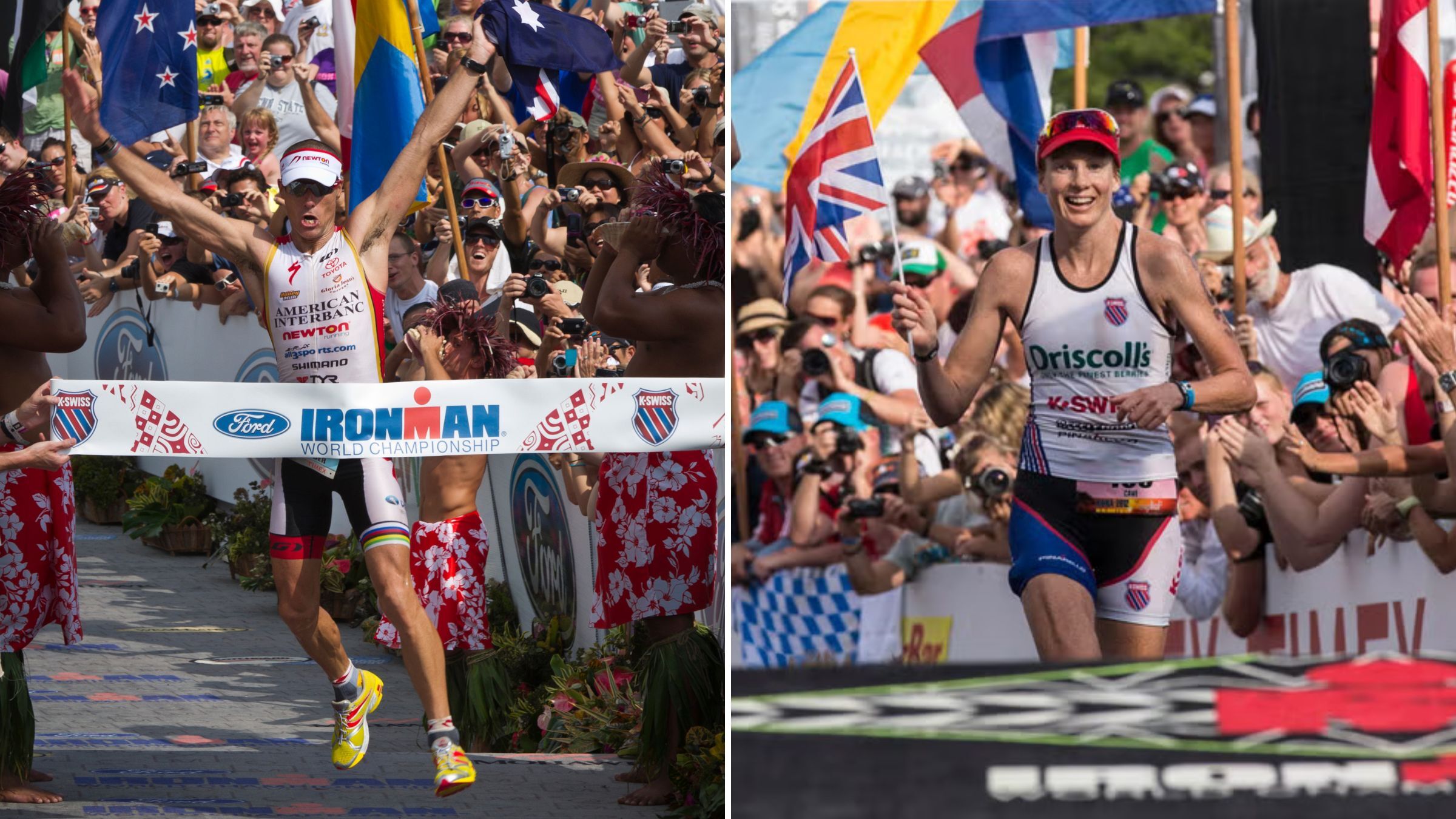
(Photo: Alvis Upitis, Jeff Clark/Triathlete)
SUMMARY:
- Winning both the Ironman 70.3 and Kona world championships in a single year is a rare feat achieved by only four triathletes in history: Craig Alexander, Leanda Cave, Jan Frodeno, and Daniela Ryf.
- Alexander and Cave tell Triathlete that pulling off this double requires meticulous planning, exceptional training consistency, and a strong ability to perform in extreme heat.
- For the 2026 season, several elite athletes are positioned as top favorites to chase this double win, including Solveig Løvseth, Taylor Knibb, and Kristian Blummenfelt.
It’s an elusive double: winning the professional Ironman 70.3 World Championship, followed by the Ironman World Championship in Kona in the same year. The feat has only been achieved by four triathletes: Australia’s Craig “Crowie” Alexander (2011), Great Britian’s Leanda Cave (2012), and Germans Jan Frodeno (2015) and Daniela Ryf (2015, 2017, and 2018).
ADVERTISEMENT
Admittedly, Kristian Blummenfelt has won both world championship titles in the same season, too. On the back of a pandemic-adjusted calendar in 2022, he triumphed twice in St. George: first, at the full distance championship in May, then at 70.3 Worlds in late October. But with respect to Utah’s Snow Canyon and all the challenges the location entails, the Norwegian himself has insinuated it didn’t have the same luster as backing up his 70.3 Worlds win on the Big Island of Hawaii.
With that caveat, the 70.3 Worlds/Ironman double is a feat that hasn’t been achieved in eight years. The last time was when Switzerland’s Ryf ran away from Brit Lucy Charles-Barclay at the 2018 70.3 Worlds in South Africa, and then cycled clear of the same rival six weeks later in Hawaii with a record bike split (4:26:07) that remains more than five minutes faster than any other woman has pedaled at the event.
Ryf’s dominance made such a difficult “double” look almost routine. From Zell am See, Austria, in 2015, Chattanooga in 2017 and Nelson Mandela Bay in 2018, Ryf was a hot favorite for a fourth double in 2019, winning 70.3 Worlds in Nice again before illness skewered her race in Hawaii. When a stomach bug left her drained, she eventually placed 13th in a time 48 minutes slower than the previous year.
ADVERTISEMENT
Ryf’s story is evidence that preparation and application need to be near-perfect to pull off a 70.3 Worlds/Kona double. It’s also a reminder that a pro who looks unbeatable on Nice’s Promenade des Anglais this weekend could stumble along Ali’i Drive just weeks later.
The history of the 70.3 and Kona double
It’s fun to hypothesize how some of triathlon’s early pioneers, like Mark Allen or Natascha Badmann, could have pulled off the double-win feat, but the inaugural Ironman 70.3 World Championship didn’t take place until 2006. For its first five years, the race was hosted in Clearwater, Florida, in November, by which time the Kona winners would often be relaxing on a beach elsewhere (no Ironman World Champion in that period placed on the podium in the 70.3 Worlds that followed).
But in 2011, the 70.3 world championship race moved to Henderson, Nevada, and was scheduled in the month before Kona. An opportunity opened, and 38-year-old Alexander was the first to seize it.
“There’s no doubt the Ironman 70.3 World Championships in 2011 being scheduled in Las Vegas worked in my favor,” the now-53-year-old, who will be inducted into the Ironman Hall of Fame this fall, tells Triathlete. “I was excited. It was four weeks before Kona, it was an ambitious plan, but I definitely thought it was achievable by a versatile athlete who had planned out their season and training well.”
In 2007, Alexander attempted the double, but the scheduling was different. “I finished second in Kona and then fourth at 70.3 Worlds just three weeks later,” he says. “My plan that year hadn’t been to race in Clearwater – a flat, very fast course in cooler conditions – after my debut in Hawaii, but as defending 70.3 world champion, I thought I owed it to the sport.”
ADVERTISEMENT
Even though 70.3 racing is fast and furious, the course in Vegas was very hilly for the bike and run, and conditions were best described as “extremely hot.” Crowie says this worked in his favor: “This made it a strength race as much as a flat-out drag race, so I felt I could definitely prepare well for both.”
Alexander was in his prime in 2011, drawing on the experience he’d gained through wins in 2008 and 2009 and a sobering fourth place in 2010 to win his third and final Ironman World Championship, breaking Luc Van Lierde’s 15-year-old course record in the process. Alexander remains the oldest winner of the title.
“In my heart, Kona took priority,” he says. “It always did, as watching the race on television in the late 1980s is what drew me to the sport. But my mental and physical preparation placed equal importance on both. To win both titles takes really good planning, execution, and some luck. It was an extremely difficult challenge, but I always believed it was possible for an athlete who had the right tools, and it’s definitely an illustrious little club to be a part of.”
ADVERTISEMENT
Key factors for pulling off a 70.3/Ironman Worlds double win
You might also need experience. Cave and Frodeno were both 34 when they pulled off their double-win feat, with Ryf younger at 28 but long-established in the sport, representing Switzerland in junior competition as early as 2003. Cave, who matched Alexander’s Nevada-Hawaii double the following year, had also been on the 70.3 Worlds podium twice, and finished third in Kona in 2011. However, she feels it was the races that went badly that taught her the most.
“Those were the days when I could really sit back and reflect,” she tells Triathlete. “I was a bit of a loner, and I didn’t need a coach to tell me where I fell short. I could unpack my result in fine detail and say what I was doing well and what I was doing poorly.”
In 2012, Cave, who now runs a coaching business from her home in Aspen, Colorado, found that little went wrong. What was the key? “This is going to sound a little strange, but I had no other distractions,” she says. “I wasn’t in a relationship, I was living alone, and I was able to completely focus. Some athletes thrive on having a support mechanism, but I was very independent and self-sufficient.”
ADVERTISEMENT
Though Cave was training in the triathlon hotspot of Boulder, Colorado, she says she wasn’t in the “Boulder Bubble” where she was surrounded by athletes: “I trained alone and felt I could execute my workouts with autonomy. If I needed a bit more sleep, I would go an hour later. Whereas when you’re training in that group environment, you’re expected to turn up.”
There’s no doubt that the Ironman 70.3 World Championship was a far smaller event in 2012 than it is today. Less than 1,800 triathletes competed in the one-day race, compared to the festival in Nice this year, where up to four times as many can be expected over two days of competition.
“It was quite funny because I’d never really considered winning it,” Cave says. “I drove out to the race, I was there alone, and I was just like: Let’s just get it done. I’m not saying I wasn’t trying to win; I just didn’t expect that from myself because I was only really thinking about Kona.”
Training in Tucson, Arizona, at the time, which Cave believes was even hotter than the area around Las Vegas, she thrived in the oppressive conditions. That benefit extended to Hawaii, too.
ADVERTISEMENT
“[The heat] didn’t hit me whereas a lot of athletes start to fade,” she says. “That year in Kona was extremely hot too, and I think it’s probably why I did so well in both of those races. I was just very good in that climate. In Kona, when I passed Caroline Steffen in the closing miles of the marathon, I vividly remember her grabbing a whole bottle of water from the aid station and dumping it over her head. She was definitely in a place where the heat was causing her a lot of distress, and that was when I was like: I’m going to go for the kill. But at the same time, I was like: Damn, that’s a really good idea. I’m gonna do the same!”
Cave also feels that consistent training was central to holding off USA’s Kelly Williamson at 70.3 Worlds in Henderson, and then running down Steffen in Kona: “I was always riddled with little injuries in my career, but leading into 2012, I’d had a long string of training consistently, which was huge,” she says. “I tell my athletes today that 90% of their training is being able to execute week in, week out without interruptions. It’s the other 10% you get from nailing that high-intensity stuff that’s going to peak your fitness.”
ADVERTISEMENT
The competitive mindset is also a prerequisite. “It was always about being on the podium and achieving great results,” Cave says. “Some people would be happy with a top 10, but I’m going for the win every time. I was always pushing that line where you can cross it, break down physically, and have a disaster of a race.”
In addition, Cave says she would try to secure her Hawaii qualification as early as possible to alleviate the pressure of having to finish a full-distance event in the build-up to championship season. “After racing in Kona, I would race another Ironman to qualify for the following year,” she says. “I just wanted to avoid cramming qualifying for Kona in the lead-up to the world championship, because I honestly felt, and still believe, the Ironman distance isn’t a healthy distance. It’s detrimental to your physical shape, and if you do too many, you break down physically and mentally. I was always very aware of that.”
ADVERTISEMENT
The final element that Cave felt was needed for both events – and one that more triathletes recognize as the times for both distances have tumbled in recent years – is the need to retain speed. “I was training a lot more speed than a typical Ironman athlete,” she says. “I think that contributed to being able to perform at the 70.3 level, but I also feel that that plays into why I was able to achieve great results in Ironman.”
Cave, who was coached by Siri Lindley at the time, says believing in her coach’s training philosophy “played out in a way that helped me to achieve both results,” saying, “One of the big things was always having the speed component. It would often be a combination. A speed workout in the pool, and half an hour later I’m on the treadmill. The duration of training would be maybe 90 minutes, but I’ve just executed two very high-intensity workouts. I also think that when you’re training at speed, especially with running, you’re training with really good running form, and it helps ingrain it into your racing.”
Who could win the Nice-Kona double in 2026?
At the time of writing, 43 professionals (28 women and 15 men) on the start lists for the 2026 70.3 World Championship and Ironman World Championships have a chance of winning both races. In reality, the number who can actually win both is far fewer. Here we look at the athletes who are most likely to succeed.
ADVERTISEMENT
Pro women
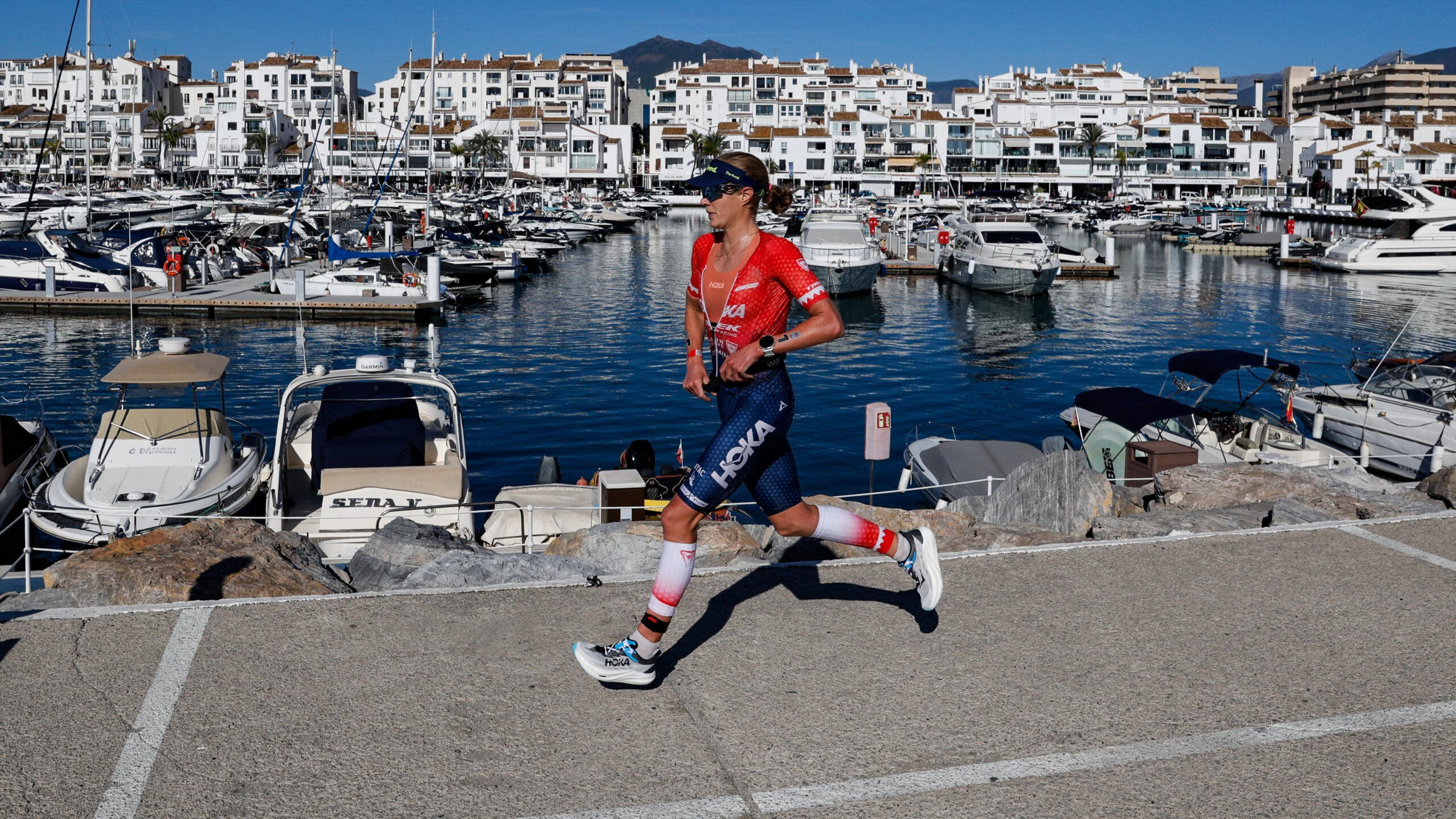
Solveig Løvseth, NOR
Last year, the young Norwegian went to the Big Island as a rookie. This year she’ll return as defending champion and a hot favorite. The 27-year-old’s season is almost unblemished. With two Ironman wins already, taking both the North American and European titles and beating rivals such as Knibb and Laura Philipp in the process, the only defeat came at Oceanside, where even then she was hunting down Knibb.
Taylor Knibb, USA
Three-time 70.3 world champion Knibb was agonizingly close to the same double last year, leading in Hawaii until her body failed her within two miles of the finish. In Marbella, it was second place behind Charles-Barclay. In between, Knibb will also attempt the cycling time trial at the cycling world championships in Montreal as she looks to compete in both disciplines in the Los Angeles Olympics. It’s a hectic schedule, but not unlike previous seasons, and once on a roll, Knibb can look like she’s in another league – particularly on the bike.
ADVERTISEMENT
Kat Matthews, GBR
The double might be a stretch, but Matthews will relish the opportunity to clinch a first world title after five runner-up spots – two at the 70.3 distance and three at the full distance. The Ironman World Championship in Nice two years ago showed how much she enjoys the bike course in the Maritime Alps, and along with Philipp, she may well be the best technical rider in the women’s race. Any lingering demons from a Kona DNF in 2023 subsided last year when she set a new run course record of 2:47:23 – meaning that alongside the now-retired Anne Haug, Matthews is the only woman to run sub-2:50 in Hawaii.
Laura Philipp, DEU
If Philipp can do the double, it might change the way triathletes plan their seasons. Having raced in Hamburg in June, a disrupted season with health issues led to her backloading the calendar, with a surprising start line at Ironman Kalmar in mid-August, followed by 70.3 Zell am See, Austria, at the end of the month. But she won both comfortably and has tasted victory in Nice before with the full-distance title in 2024. Don’t rule out 70.3 success, but given she’s finished in the top four in Hawaii four times, a first Kona win will be the priority.
Julie Derron, CHE
Derron missed Hawaii last year following a bike crash in training, and chose to focus on T100 racing rather than Ironman 70.3. However, the Olympic individual silver medalist shouldn’t be discounted. A proven force at middle distance who has comfortably won both recent Ironmans she’s taken part in (although both were non-Pro Series races in both Vitoria-Gasteiz last year and Switzerland). While it will be Julie’s first time racing in Kona, her older sister Nina will also be lining up and has plenty of experience to pass on.
ADVERTISEMENT
Pro men
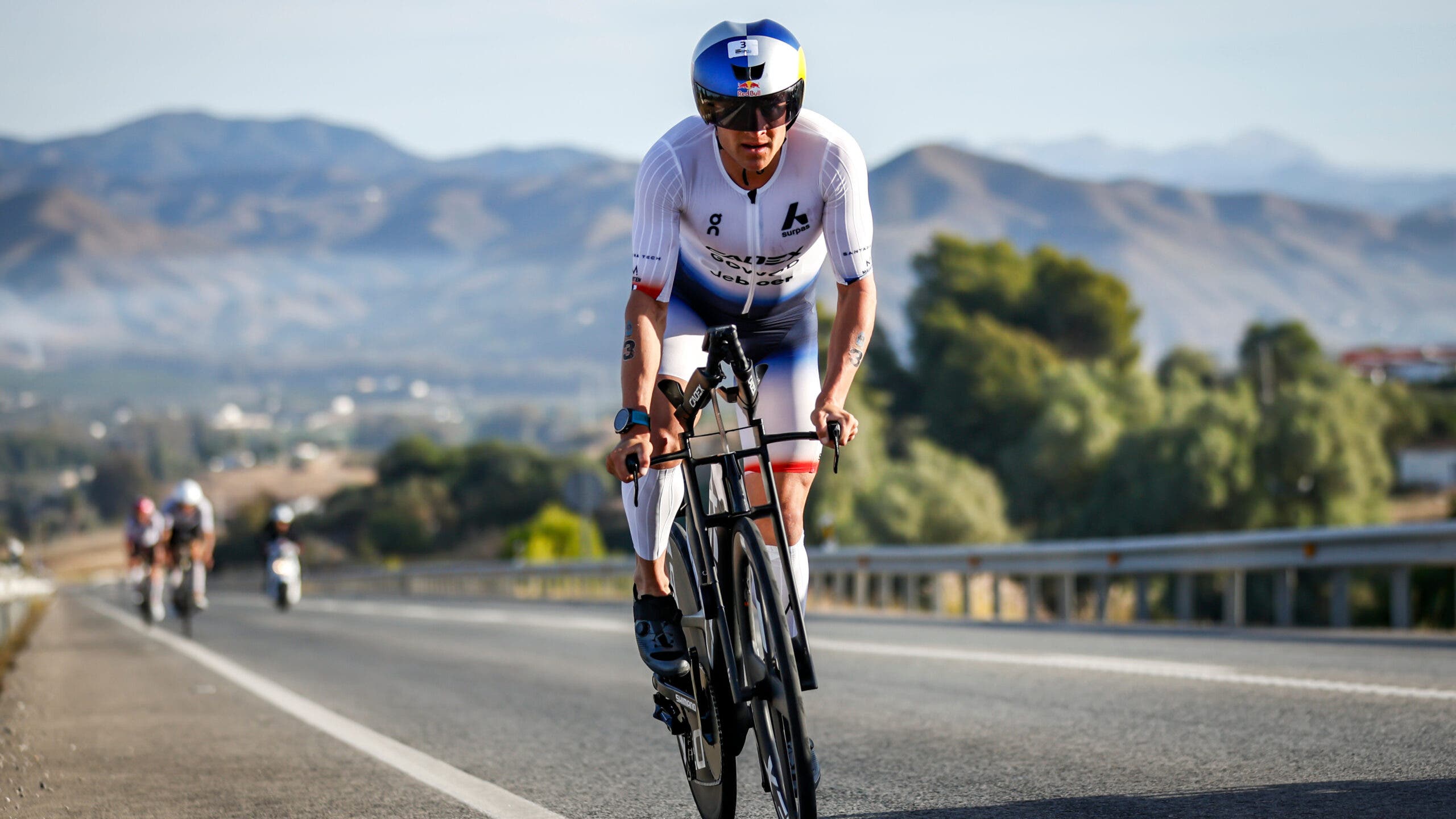
Kristian Blummenfelt, NOR
Blummenfelt is consistently the leading name for a potential double on the men’s side. The Ironman World Championship in Kona represents the final piece of the triathlon puzzle for Blummenfelt, but despite the Norwegian’s focus on avenging his Hawaiian disappointments of the past (a third place in 2022 and 35th after vomiting extensively in the 2024 race), by nature he will still be competitive for 70.3 success. Following the St. George victories of 2022, he knows what it takes to win both titles in the same year, and having missed out narrowly on both last year – and viewed topping the Pro Series as little more than monetary consolation – it shouldn’t be ruled out.
Casper Stornes, NOR
The reigning Ironman World Champion will join training partners Blummenfelt and Gustav Iden in completing the set if he wins a 70.3 world championship. Stornes has gone from strength to strength since focusing solely on long-course racing for the past 18 months. More understated than his compatriots, Stornes hasn’t let up after victory in Nice last year. Victory in Ironman Frankfurt in June ahead of Iden, a race shortened due to temperatures topping 100 degrees F, showed he can handle the heat. Stornes now needs to show he can handle the humidity as he prepares for a debut in Hawaii.
Marten Van Riel, BEL
Van Riel split Blummenfelt and Stornes on the Ironman podium in Texas in April and, along with Laidlow, has replaced Magnus Ditlev as the athlete the Norwegians are most wary of. With good reason. Van Riel has long been a class performer – placing sixth and fourth in the Olympic Games, a former T100 world champion, and holder of the fastest 70.3 time on record – 3:26:06 in Dubai in 2022. It will be his debut in Kona, but Van Riel scored a first Ironman victory in Lake Placid this year and has shown he can race all distances.
ADVERTISEMENT
Gustav Iden, NOR
It looks unlikely that Iden will be able to deliver at both Nice and Kona in 2026, but if the Norwegian discovers the form that led him to 70.3 world titles in 2019 and 2021 and victory in Hawaii in 2022, he shouldn’t be completely ruled out. Iden has shown signs of returning to his best, particularly in Nice last year, where he finished second on an all-Norwegian podium. But he also admitted he was spent after that effort and was well below par when starting in Marbella almost two months later. Both Blummenfelt and Stornes are a better double bet for 2026.
Jonas Schomburg, GER
There are more women than men who look viable candidates for the 70.3-full double, but if you’re looking for a dark horse, then Germany’s Schomburg could be your guy. He was sixth over the full distance in Nice last year and fourth at 70.3 Worlds in Spain, and while he can be hit-and-miss, Schomburg always has the explosiveness to dictate the race. That could now be matched by the required resilience after his first Ironman win in Sweden, where he finished in a staggering 7:22:57. Kalmar is not Kona, but Schomburg is still likely to be a factor.