Updated April 8, 2026 04:39PM
Should Triathletes Stop Training During Fertility Treatments?
For triathletes, whose identities are built on pushing their bodies to the limit, in vitro fertilization (IVF) demands a radical change in their relationship with training. Pros Alice Alberts and Lisa Norden, along with fertility experts, discuss the physical toll and mental stress of deciding when (or if) to stop training to maximize their chances of starting a family.
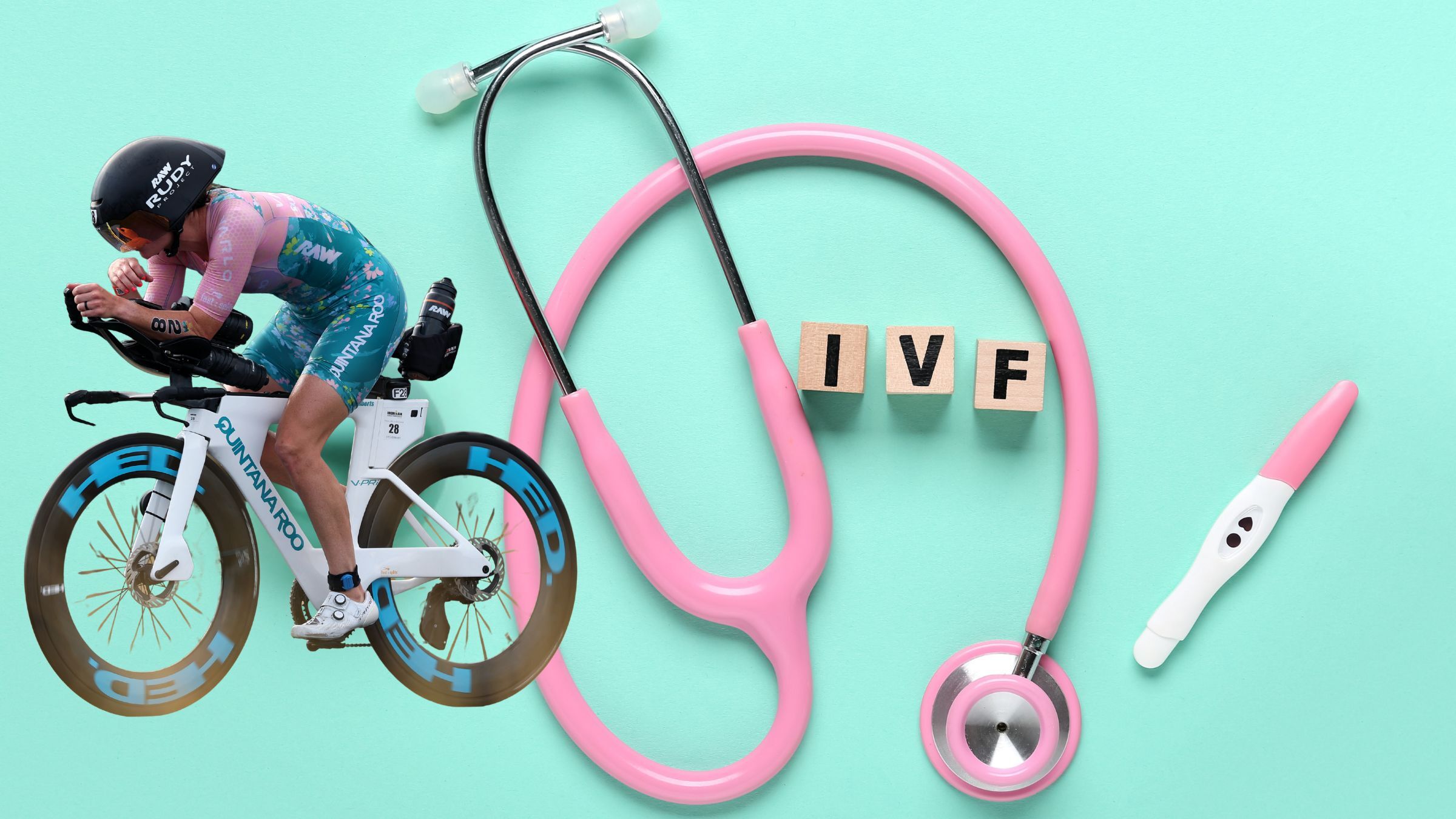
Alice Alberts recently announced that she's taking a step back from triathlon racing while undergoing IVF. (Photo: Triathlete, Ezra Shaw/Ironman)
Triathlon training during IVF
For the past four years, professional triathlete Alice Alberts has measured her life in race calendars and finish lines. After bursting onto the pro scene in 2022 and with two pro Ironman wins and several top-10 finishes on her resume, her career was on an upswing. So when Alberts quietly stepped away from competition this season, the absence raised questions – until she chose to answer them herself.
“It just felt like I was hiding something,” Alberts says. “People kept asking what my next race was, how my training was going. I was tired of dodging the truth. Now it feels really good to say, ‘I’m focusing on something else.’”
That “something else” is in vitro fertilization, or IVF. After more than a year of trying to conceive, Alberts, now 34, decided to pause her professional triathlon career – an identity built on pushing her body to its limits – to give it the best possible chance to do something very different.
ADVERTISEMENT
“My body is my tool,” she says. “It’s what I use to race. And now I also need my body to hopefully get pregnant. So it was kind of a hard place where I’m in this public job that I can’t do in order to hopefully put myself in the best position to make that successful.”
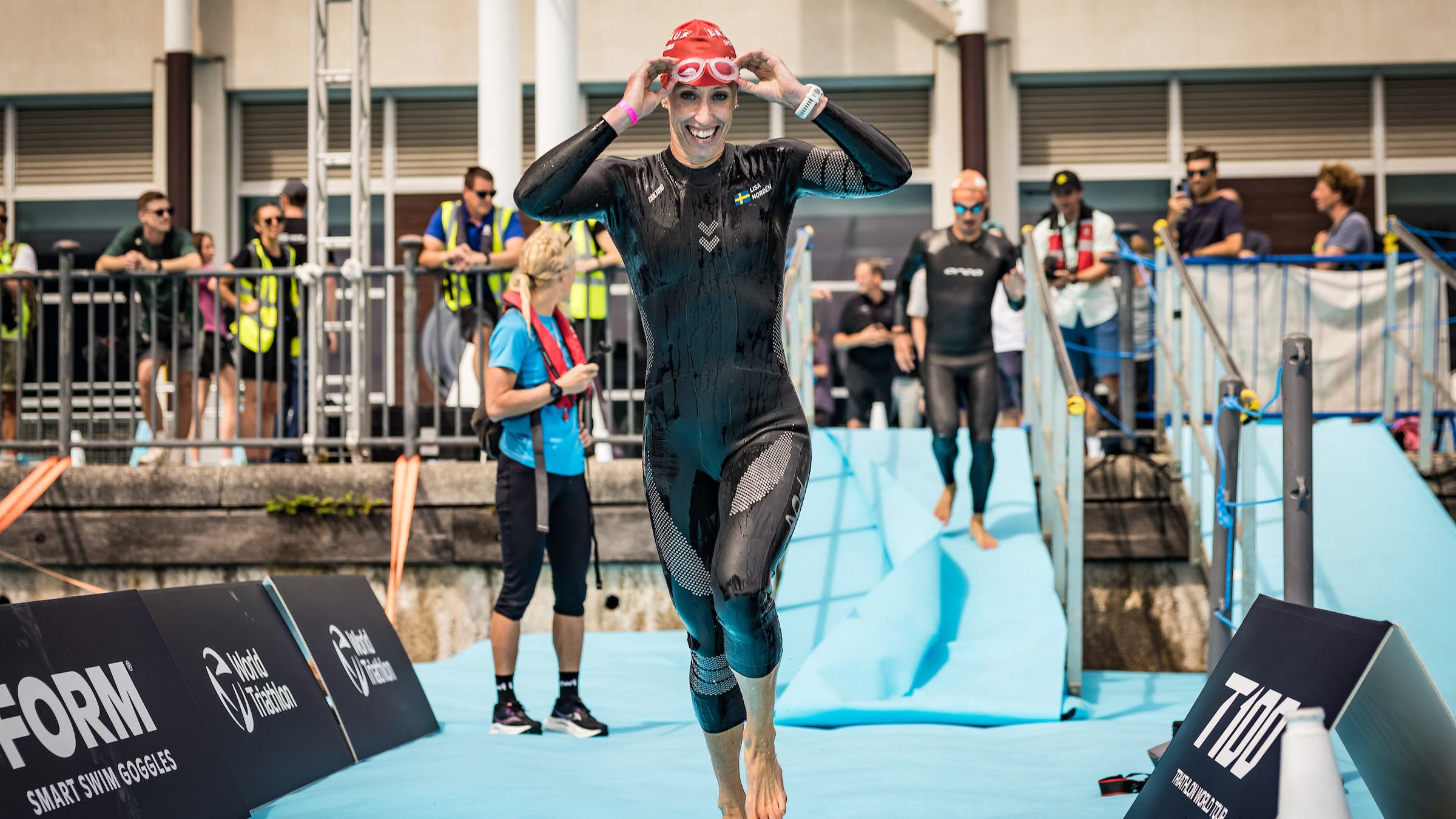
And Alberts isn’t alone. In August, Swedish pro triathlete Lisa Norden, the 2012 Olympic silver medalist who now competes in 70.3 and Ironman distances, shared on Instagram that, “for the first time in 20 years, I haven’t signed up for any start lists or plotted points or qualifications. Instead, this year has been focused on the priority of trying to start a family.” She added that she quickly realized IVF and professional Ironman racing “wasn’t a compatible combination,” and chose “the no-brainer of giving my body a bit of a break from racing.” (She’s due in July.)
And former pro Kelly Fillnow, who welcomed a healthy baby girl just last month, has also been open about her fertility journey, which included six miscarriages and IVF and led her to retirement from the pro scene in 2022.
As more women pursue fertility treatments (in 2024 alone, over 100,000 babies were born through IVF in the United States, the highest number to date), a complex question is coming into focus for endurance athletes: how does a lifestyle defined by high-volume training intersect with IVF, and what, if anything, needs to change?
When fitness meets fertility
IVF is the process of retrieving eggs from the ovaries, fertilizing them with sperm in a laboratory, and then transferring the resulting embryo back into the uterus in hopes of achieving pregnancy. It’s a tightly controlled, multi-step protocol that relies on carefully timed hormone treatments to stimulate egg production, support fertilization, and prepare the body for implantation.
At first glance, being in peak physical condition and deeply in tune with your body, as most professional triathletes are, might seem like an advantage when trying to conceive. But IVF is less about performance and more about hormonal precision.
ADVERTISEMENT
“Due to chronic exposure to the physiologic stress of endurance training, athletes may experience shifts in reproductive hormones like cortisol, estrogen, and progesterone that can negatively affect the likelihood of pregnancy,” explains Bryan Henry, a family nurse practitioner and president of PeterMD, a telemedicine-based healthcare clinic with a strong emphasis on hormone-related care. “Even if an athlete appears fit externally, the ovarian response to IVF stimulation can become less predictable because of these hormonal changes.”
He adds that high training volumes during an IVF cycle can lead to low energy availability, chronically elevated cortisol, menstrual disruption, and increased endocrine stress despite an outward appearance of excellent health.
Dr. Shefali Shastri, a reproductive endocrinologist at IVIRMA New Jersey, underscores that timing within the IVF cycle matters, too. During ovarian stimulation, when the ovaries are enlarged and sensitive, she recommends reducing intensity and avoiding high-impact efforts. After egg retrieval, rest becomes essential. And around embryo transfer, activity is typically limited to light movement, not because exercise is harmful, but to minimize added physical or physiological stress during a critical window for implantation.
“Athletes often believe if they are fit, that means they are fertile. Intense exercise can trigger hormonal imbalances and energy deficiency, resulting in irregularities,” says Shastri. “You don’t need to stop exercising to conceive, but extreme, high-volume, or very high intensity training can hurt fertility, while moderate exercise can be beneficial and improve success rates for fertility treatments.”
ADVERTISEMENT
Balancing training and fertility treatments
For triathletes, the how-much-to-train decision becomes even more complicated when an IVF round is unsuccessful. On average, the live birth rate per embryo transfer cycle for women aged 35 is around 39% in the U.S., and across all ages, fewer than half of embryo transfer cycles result in a live birth. So, for many women, IVF is not a one-and-done process.
After experiencing two miscarriages, Fillnow’s doctor recommended she go “straight to IVF,” largely because she was 40 at the time and acutely aware of how time factored into her chances of success. What she initially viewed as a temporary pause in her pro triathlon career became something more definitive as the process stretched on for more than three years before becoming pregnant with her daughter, Eliana Grace, born March 16.
ADVERTISEMENT
“I started when I was 40 and delivered at 43,” she says. “It’s just an extended period of time. I didn’t want to take breaks from it because in my mind, every month matters. You’re getting older.”
While some athletes cycle in and out of treatment by pausing IVF to travel, race, or mentally reset, Fillnow felt compelled to stay the course.
“A lot of people take breaks because it’s too much,” she says. “But for me, I just needed to keep going.”
The sentiment is shared by Alberts, who knew she wanted a family more than anything.
“It wasn’t really that hard of a decision,” she says. “I thought, would I rather chase a top-10 Kona finish or focus on starting a family now, with the hope that I could get back into racing later?”
Alberts also found that an injury the previous year helped put things into perspective. A stubborn Achilles issue had kept her out of racing for months last year, overlapping with her hopes of conceiving.
ADVERTISEMENT
“I kind of felt like a failure, both at my sport and in my dream of becoming a mom. But it really gave me perspective. I wasn’t able to train to my full capacity, so I wasn’t showing up fully in races,” she says.
That period of forced rest, while difficult, became an unexpected silver lining.
“I couldn’t train as usual, so when my husband and I decided to pursue IVF this year, I felt more prepared to navigate that identity shift,” says Alberts.
ADVERTISEMENT
Enduring the mental game of IVF
Perhaps the toughest element of going through infertility as an athlete is the reality that even if you do everything “right,” it still may not work. For high-achieving athletes, that can be a difficult truth to accept.
“We’re used to hard work creating a result. We stick to the process, and we see improvements,” says Fillnow. “But with infertility, the harder you work, it does not necessarily create the outcome that we desire. You can do all the right things, and that result is still not there. And that’s devastating.”
Which is where the catch-22 emerges: many triathletes rely on exercise to manage stress, yet during one of the most stressful periods of their lives, they’re often advised to scale it back. For Alberts, that tension is constant and frustrating.
“The doctors are just like, ‘Don’t run,’ because it’s so straining on your body,” says Alberts, who left her job as a nurse practitioner to pursue triathlon. “But it’s hard to hear, because I know I can run at a very low heart rate and keep it there. Everyone’s experience is different, and obviously, we haven’t been successful yet, so I’m not an expert – but I’m just trying to figure out what works to keep my body healthy, but more importantly, what keeps my mind healthy. That’s my biggest goal right now.”
ADVERTISEMENT
Currently, Alberts is training for up to two hours a day, focusing on lighter movement. “It’s more swimming, more walking, good strength work,” she shares. “It really helps my mental health to feel fit and in shape. And I want to be fit, because I really want to be able to come back racing as a pro after having a child.”
During her IVF process, Fillnow also found herself caught between conflicting medical advice. Ultimately, she found a physician who understood her background as an endurance athlete (and in a fun twist, recently finished his first triathlon thanks to her influence).
“He came to understand what’s normal for me,” she says. “I might be running a lot of miles, but I know how to keep it easy. I’m not pushing intensity. And running is cathartic for me. I need that for my brain, too.”
En route to her full-term pregnancy, Fillnow stayed relatively active during her rounds of IVF, adjusting as needed through each phase. “I’d keep moving, even running, until a certain point in the cycle, then I’d stop,” she explains.
ADVERTISEMENT
That approach did shift over time, however. “In most of my prior pregnancies, I ran from the start,” she says. “But with my last one, I didn’t run at all for the first 10 and a half weeks. At that point, after multiple attempts, it was more about doing whatever we could. There’s no real correlation between running and a successful transfer, but I knew if something went wrong, I’d blame myself. So we took that variable out.”
At her 10-week appointment, her doctor expressed surprise. “He was like, ‘You’re still not running?’” she says, laughing. “He thought I would be. But that day, I finally went for a run.” The pregnancy stuck, and Fillnow continued to run through her entire pregnancy.
“Exercise was the thing that helped me get through it,” she says of the emotional stress of IVF. “So I had to change the focus. It wasn’t about performance anymore; it’s about mental release.”
ADVERTISEMENT
Do I need to scale back on training during IVF?
While research is lacking among high-performing athletes and pregnancy in general, experts stress that athletes don’t need to stop training entirely during the IVF process. But they agree that scaling back is essential.
“I encourage athletes to engage in forms of exercise that promote blood flow and general well-being without adding stress to the reproductive system,” says Henry. “The goal is to optimize treatment conditions, not to take a long-term break from athletics.”
And, as Fillnow experienced, exercise can often resume more normally after the two-week wait following embryo transfer and a positive pregnancy test. That said, every patient is different.
“Depending on underlying medical conditions or other concerns, these recommendations can vary on a case-by-case basis,” says Shastri. “The goal is to feel calm and manage your stress when you are going through this very important part of the process that you have very little control over.”
ADVERTISEMENT
It’s a journey, not a sprint
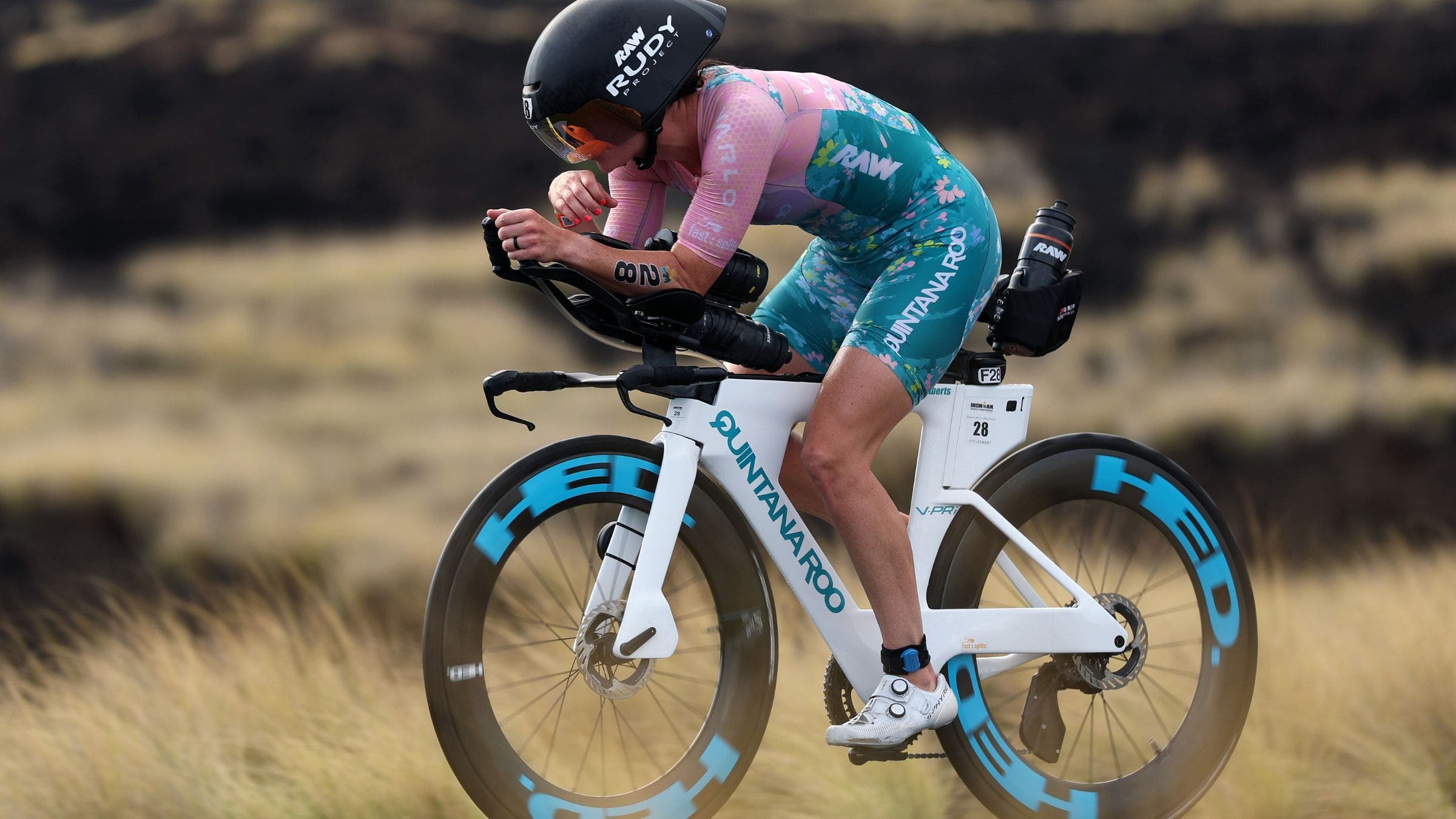
As Alberts is experiencing – and as Fillnow knows all too well – the uncertainty and emotional roller coaster of IVF demands a different kind of resilience, one not unlike that needed on the race course.
“I think it helps to see the journey like an Ironman, not a sprint,” Fillnow says. “At first, I thought it would just happen … we’d be successful right away. But it ended up being more than three years of highs and lows.”
That perspective, she says, is something endurance athletes are uniquely equipped to draw on. “In an Ironman, you’re always cycling through good moments and really dark ones. But you learn how to get yourself out of those lows and keep going. It’s about patience, and trusting that you’ll find your way through.”
ADVERTISEMENT
It’s also shaped how she thinks about perseverance. “I had people asking, ‘When are you going to give up? When do you move on?’” she says. “But I didn’t want to give up too soon. In a race, you don’t just quit in the middle of an Ironman because it’s hard – and this is hard. It’s really hard. But it’s worth fighting for.”