Published June 9, 2026 09:34AM
Jonny Brownlee Raced 10 Sprint Triathlons in 2 Days. Here’s How He Did It.
At Supertri Blenheim Palace, the three-time Olympic medalist took on the Weekend Warrior challenge alongside age-groupers, including many first-timers. Less than halfway into the event, he was already wondering whether he could finish.
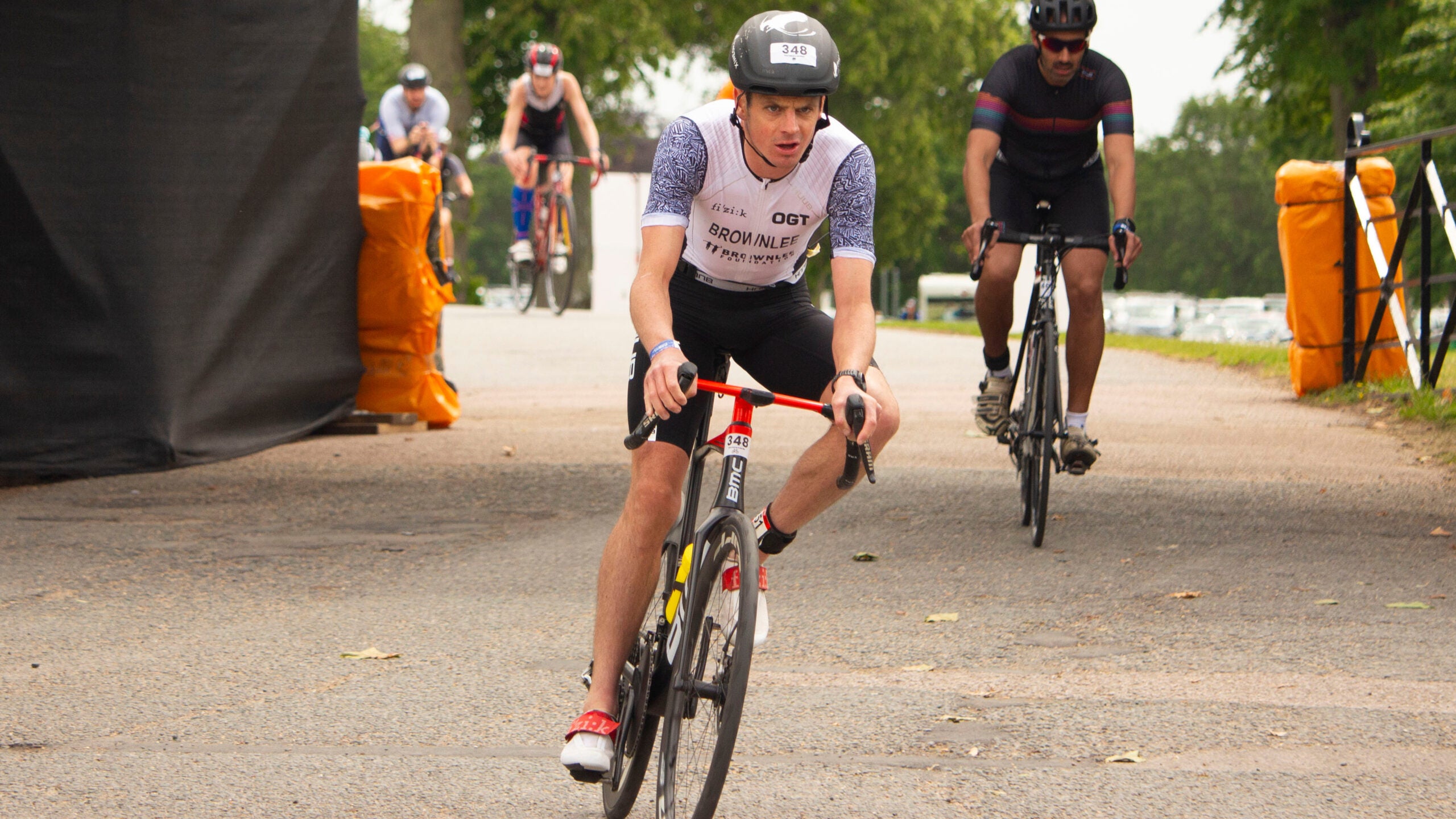
Among 6,000 amateur competitors, Jonny Brownlee bikes during Supertri Blenheim. (Photo: Supertri)
By the fourth sprint triathlon of the day, Jonny Brownlee knew he had misjudged the assignment.
Not the math on making cutoffs. He had done that.
Not the distance. He understood that, too.
Ten sprint triathlons across two days at Supertri Blenheim Palace meant 7.5 kilometers of swimming, 200 kilometers of cycling, and more than 50 kilometers of running, not including the transition runs.
On paper, that’s more than an Ironman’s worth of racing, chopped into 10 separate pieces and squeezed into two days.
But by mid-Saturday, with rain, strong wind, and the kind of damp British weather that chills your bones, Brownlee realized the Weekend Warrior challenge was going to be something else entirely.
“I don’t think I realized the extent of the challenge until I was about four races in on the first day,” Brownlee admits afterward. “We had sideways rain and really strong winds, and it hit me. I thought, ‘Wow, this is going to be quite a long day.’”
ADVERTISEMENT
At that point, the numbers stopped being abstract. Brownlee was three triathlons down but still had three more to go that day, then another four the next day.
“That’s an early point in the day to realize that this was going to be tough,” he emphasizes. “You start to break it down in your head and think, ‘That’s a long way. That’s a lot of racing to go,’ and you start to wonder, ‘Am I actually going to be able to do it?’”
The answer, eventually, was yes. Brownlee became the first athlete to complete 10 sprint-distance triathlons in a single Supertri Blenheim Palace Weekend Warrior challenge.
10 sprint triathlons, 2 days, 1 ticking clock
Blenheim Palace has been part of British triathlon’s fabric for decades. Brownlee raced there as a junior; he remembers testing himself against senior athletes there, and he returned with brother Alistair in 2012 before the London Olympic Games.
“I haven’t been back there since 2012,” he reflects. “There’s a lot of history to the event.”
ADVERTISEMENT
This time in Blenheim, Brownlee was attempting a different kind of history. The Weekend Warrior event permits athletes to complete as many sprint triathlons as they choose across the weekend. Some do two on Saturday, one on Sunday. Some do one as an individual and the next one timed to run alongside a family member. Some sit in transition and have a picnic before taking on the next one.
For Brownlee, the aim was 10. Each sprint consisted of a 750-meter swim, 20-kilometer bike, and 5.7-kilometer run. But the official distances do not tell the whole story.
After each finish, Brownlee had to get back to the swim start, roughly 600 meters away, put his wetsuit back on, refuel, and begin again. Meanwhile, the clock kept running.
“You get to the finish, and then the clock’s still rolling,” he explains. That meant efficiency mattered almost as much as speed. Brownlee had support to help him reset transition, change his bottles, prepare fuel, and keep him moving back to the next start line. To save time, Brownlee even borrowed a child’s bike so he could ride back to the swim start while eating.
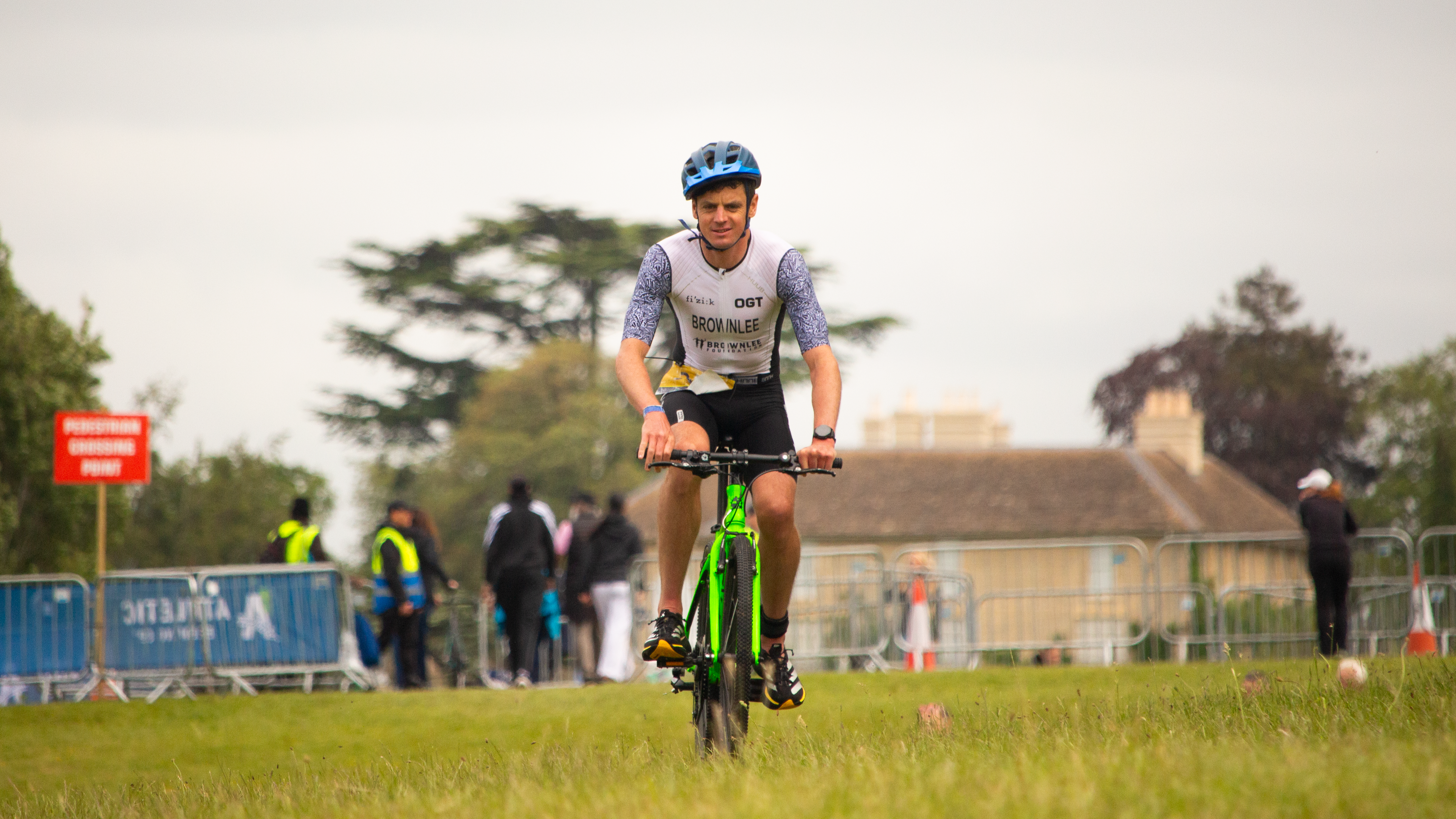
“Everyone was like, ‘What are you doing?’” he laughs. “To see me run past up the hill and then see me on this little green bike riding to the sprint start.”
ADVERTISEMENT
He used a sleeveless shorty wetsuit because wetsuits were mandatory, but he needed to get in and out quickly. While some participants would take 10 minutes between races to put on their wetsuits, Brownlee had at most 6 or 7 minutes between each sprint to reset. The goal was not to win each race, but he could not dawdle, as he needed to make the next swim cut-off.
The course didn’t make it easy
Blenheim Palace is not an easy place to stack sprint triathlons.
“It’s probably the hardest course to do it on,” acknowledges Brownlee. “You get out of the water, you have a 500-meter run up a really steep hill to get to transition.”
The bike isn’t flat either. With a rolling course and constant traffic from fellow athletes, Brownlee selected a road bike instead of a time-trial bike because he knew he would be passing people all day and wanted something safer, more comfortable, and easier to handle.
Then came the run, which was also hilly and slightly longer than the traditional sprint distance, measuring 5.7K. And because of the run to transition and the repeated trip back to the swim start, Brownlee estimated his real running total was much higher than the official 57K.
ADVERTISEMENT
“I think I ran the best part of 65K,” he says. “By the time you’ve done both transitions, it adds up pretty quickly.”
There is one other detail that makes that number sting: He ran all of it without socks.
“So 65K of no socks running, 200K of cycling, and then 7.5K swimming,” he smiles during the interview with Triathlete. “It does end up being a long, long couple of days.”
The training: consistency, base, and keeping it fun
Brownlee doesn’t pretend his was normal age-grouper preparation. Thirty years of swimming, a lifetime of elite running, and three Olympic medals give him a foundation almost nobody else has. But his preparation for Blenheim was not a classic elite build either.
He is now 36, a new father, and unsure what his professional racing future looks like. His son, Freddie, is 8 months old, and that has changed the structure of his days, particularly around swimming.
ADVERTISEMENT
“Mornings with Fi [Brownlee’s wife] and Freddie make it harder to meet the swim squad because that’s obviously a fixed time,” he shares, “so I probably averaged about three swims a week. But my swimming’s fine. I’ve obviously done 30 years of swimming.”
Cycling became a bigger piece of his training over the winter after a running injury forced a shift in emphasis. However, he opted to forgo a lot of structured training, preferring to ride with friends where possible.
“Cycling, now more than ever, is my social side,” Brownlee says. “That’s when I go out and meet people, meet friends, so it’s all about fun group rides.”
On the run, Brownlee built his long run up to about 30K because he knew that would roughly be the amount of running required to get through Saturday’s six races. But he did almost no fast running since he knew durability rather than speed would be the limiter.
“I didn’t run faster than a four-minute kilometer until Saturday,” he laughs, “and then I had to run about 57K all faster than four minutes per K!”
ADVERTISEMENT
To stay motivated, Brownlee also mixed in gravel races and adventure-style events, including a 10-hour challenge in the Peak District that involved kayaking, fell running, mountain biking, and orienteering.
“More than anything, I focused on just keeping the training fun and doing different challenges,” he admits. “You build longevity doing it that way rather than going at it on my own.”
The low point
The hardest part of the weekend came on Brownlee’s fourth sprint on Saturday. He was cold. He was wet. His bike power was dropping. He suspected he had eaten too little, not accounting for the extra calories burned with the cold temperatures. He was barely halfway through the day, and he still had Sunday to go. At one point he had to put on a jacket for the bike leg – something he had not expected to need – and wondered to himself whether he could do this.
“It was really, really cold,” he remembers. “The end looked a long, long, long way away.”
ADVERTISEMENT
This is where the mental tricks came in. Brownlee did what endurance athletes have always done when the task becomes too big: He lied to himself.
“Athletes are really good at lying to themselves, aren’t they?” he says. “I told myself on the fourth one, ‘You’re definitely going to feel better on the next one. Get through the swim and you’ll feel better.'”
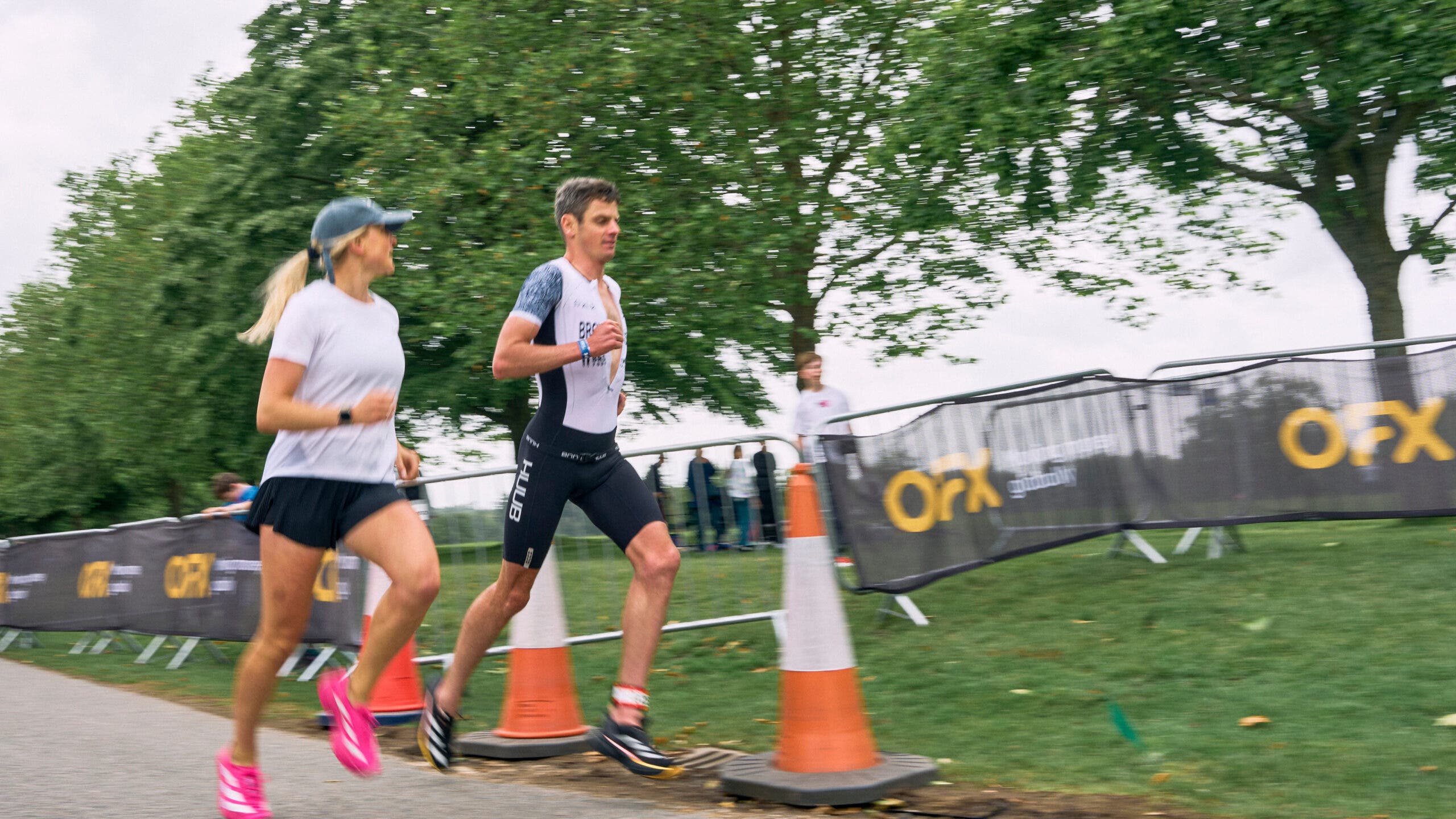
He broke down the day into smaller pieces: get through the swim, get through the first lap of the bike, get through the next section. Fi jogged with him briefly during the fifth race, which helped split up the day too. He refused to think too far ahead. And he leaned into a simple motivation: get to the finish line, see his family, take a shower, eat a meal.
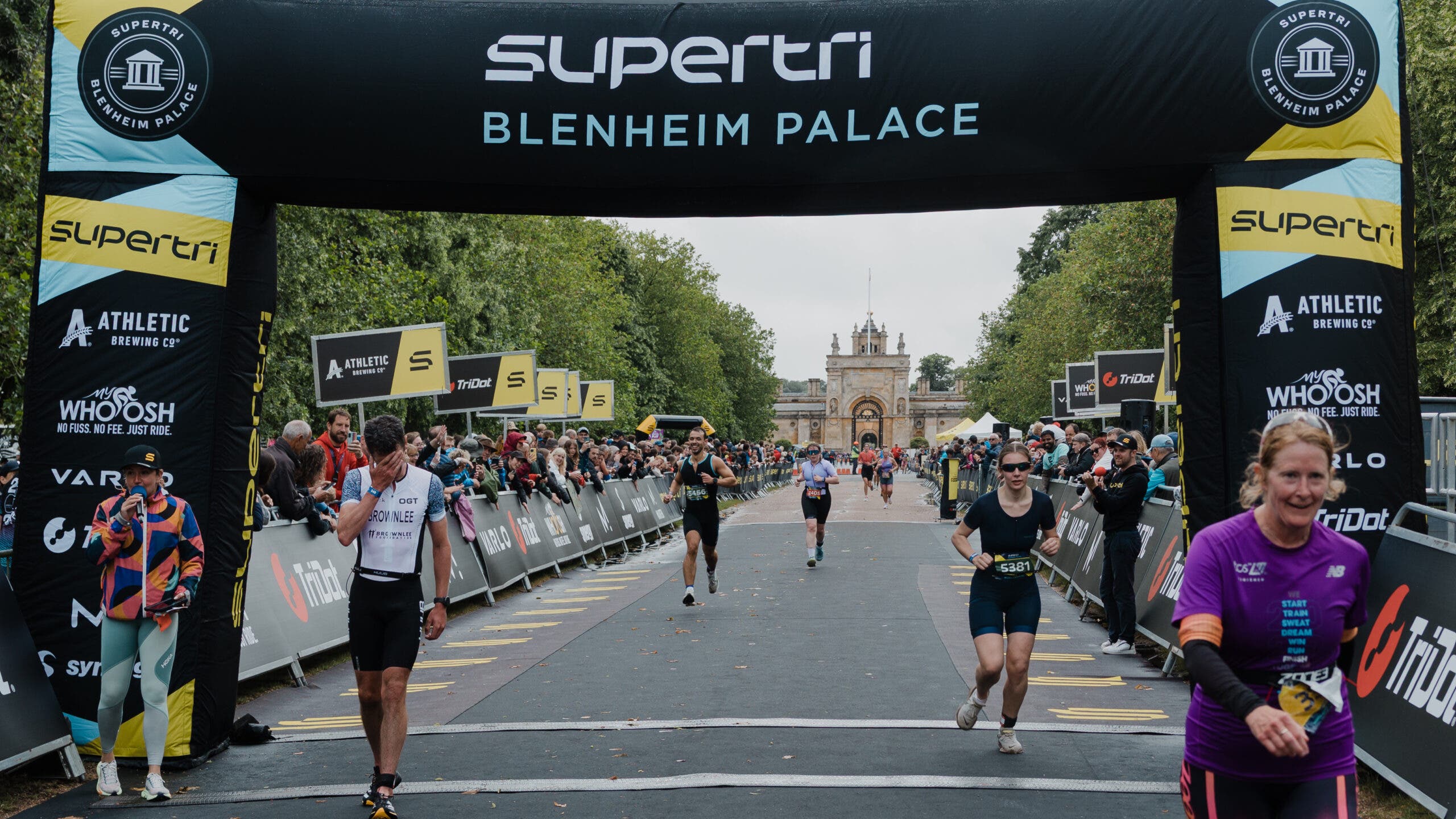
“I completely blanked out Sunday – you think, ‘Right, I’ll deal with that when it comes.’”
Eat, sleep, repeat
There was no magic recovery protocol between Saturday and Sunday. Brownlee ate, slept in a separate room from his son, Freddie, to ensure a proper night of rest, and tried to avoid starting the second day calorie-depleted. By Sunday morning, the mindset turned around. Saturday had been the unknown, but Sunday had an end.
ADVERTISEMENT
“I actually found Sunday quite easy, because you quickly realize the end is not too far away.”
Using the swim as recovery
For most triathletes, the thought of repeatedly running hard then diving back into open water sounds like a recipe for cramps. Brownlee was familiar with the feeling from Supertri’s enduro formats, where athletes race repeated swim-bike-run segments at maximum intensity.
But Blenheim was different given the six- or seven-minute reset between each race. His heart rate could come down. And because swimming faster would cost too much energy for too little gain, he treated each swim as recovery. He approached the weekend less as 10 separate races than as one long problem of time and energy management, and emotional control.
A shared course
The most meaningful part of the weekend, Brownlee reflects, was not the record, but sharing the course with hundreds of amateur athletes. Blenheim attracts a significant number of first-time athletes. While he was battling his own fatigue, he was constantly passing athletes confronting their own version of the same thing.
ADVERTISEMENT
“As I’m feeling tired, you’re going past people walking up the hill and they’re doing their own challenge – if they can do it, then I can do it as well.”
It set the tone for the weekend. Athletes cheered for Brownlee. He cheered for them. People tried to run with him for a moment, sprint past him, joke with him, then fall back. He really enjoyed the element of camaraderie and friendship throughout both days.
The event was also a change of pace for one of the best short-course triathletes of his generation. Normally, Brownlee’s racing is defined by speed: the fight to the first buoy, quick transitions, and sprint finishes. At Blenheim, he could look around.
“It was really weird being on the start line this time and not worrying about the first swim buoy or racing through transition,” he explains. “It’s quite nice just being there knowing it’s just a long day out.”
ADVERTISEMENT
There were ducks crossing the run course. There were views of Blenheim Palace (former home of Winston Churchill). There was the oddity of an Olympic medalist riding a child’s bike back to the swim start. There was time, for once, to notice the event around him.
“Normally I’m sprinting for every second and you can’t even say hello or give thanks to the crowd,” he says.
The bigger point
Brownlee didn’t take on the challenge because he needed another result – he has enough of those. He did it because at this stage of his life and career, he still needs a target, something hard enough to make training matter.
“I love training, I love being active, but I also love having an aim and a goal,” he says.
For two days at Blenheim, that goal threw him into the same chaos as everyone else: weather, logistics, transition mistakes, fuel, hills, family, fatigue, cut-offs, and the simple question that every triathlete eventually asks: Can I keep going?
By Sunday afternoon, he had his answer. Brownlee crossed the final finish line with Freddie, completing his 10th sprint and setting a new Weekend Warrior benchmark.
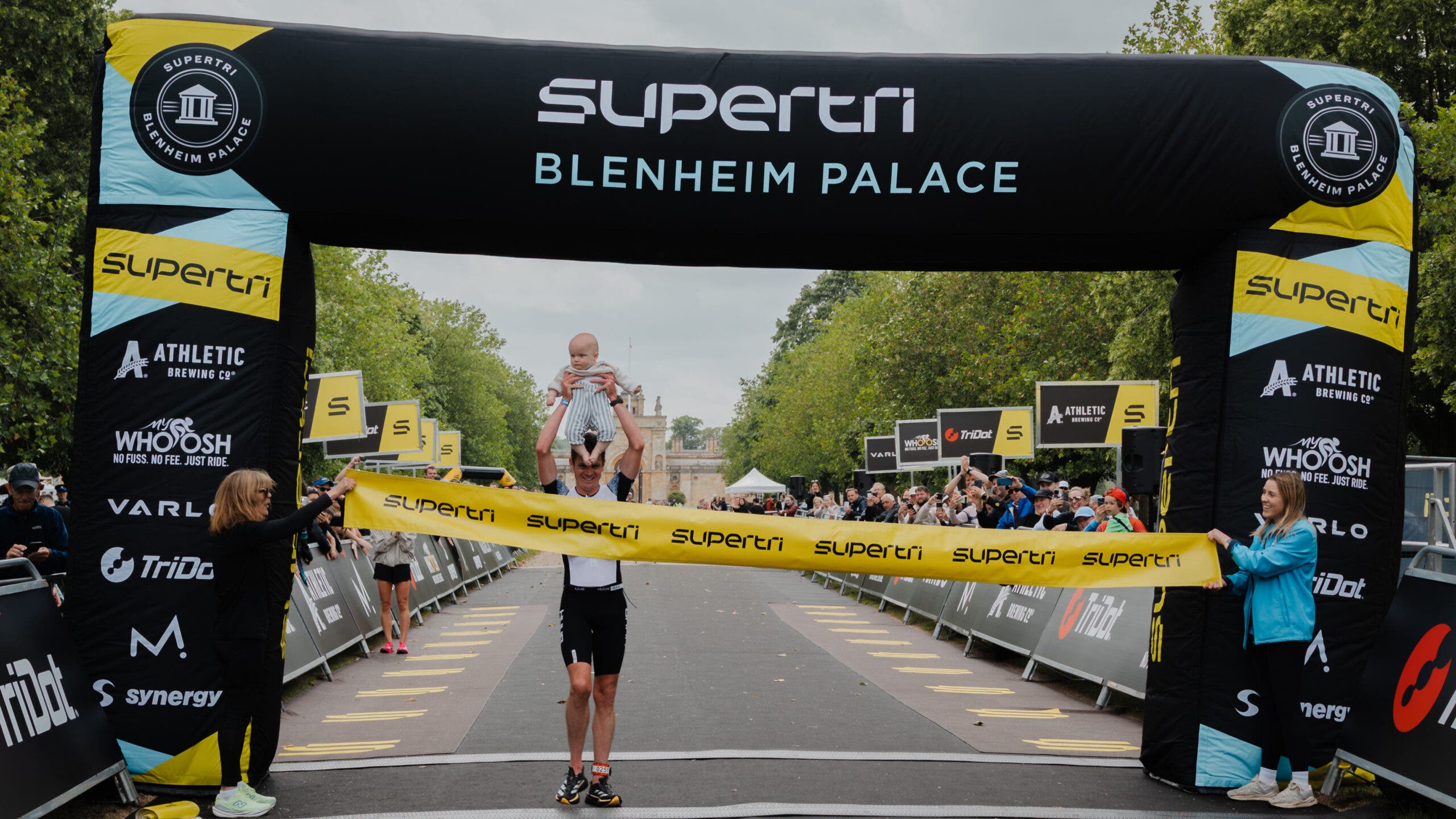
But the real story was not proving that Jonny Brownlee can still suffer. Everyone knew that. The story is that one of the sport’s great champions got through it the same way that everyone else does: breaking it down into the next swim, the next lap, the next hill, and the people waiting for him at the finish line.